#Java architect career
84 related articles

·3 min
Backend Developer Transition to AI/LLM: 4 Core Skills and a Practical Learning Roadmap
Complete guide for backend developers transitioning to AI/LLM engineering. Covers the 4 core skills—Python, RAG, Fine-tuning, and Agents—with a phased learning roadmap and practical project advice.
Read more →

·2 min
Getting Started with Codex: A Practical Guide to OpenAI's AI Programming Assistant with Tips to Avoid Common Pitfalls
A detailed guide to OpenAI Codex's core features and setup, comparing it with Claude Code, plus practical tips for configuring DeepSeek and avoiding common pitfalls.
Read more →

·3 min
A Practical Guide for Java Developers Transitioning to AI Application Development
Facing the AI wave, how can Java developers transition from traditional CRUD backend work to AI application development? This article breaks down the AI+ national strategy, China's AI catch-up logic, and offers a practical path.
Read more →

·4 min
Spring AI 1.0 Practical Guide: A Java Developer's Fast Track to Building AI Applications
Spring AI 1.0 is here — Java developers can now build AI apps without switching to Python. This guide covers LLM integration, RAG, intelligent customer service, and Agent patterns for enterprise deployment.
Read more →

·2 min
How to Choose a Programming Language? A Rational Look at the Truth Behind Language Selection
Java, Python, Go, or a niche language? This article rationally analyzes programming language selection across three dimensions — probability, difficulty, and growth potential — to help you escape language-choice anxiety.
Read more →

·3 min
AI Development for Java Engineers: A Complete Guide to LangChain4j Agents
Java developers can build AI apps too! Learn LangChain4j fundamentals including RAG, Agents, Function Calling, and hands-on projects — no Python required.
Read more →

·3 min
The Three Core LLM Job Roles Explained: Entry Requirements and Career Roadmaps
A deep dive into the three core LLM job roles — Application Engineer, R&D Engineer, and Algorithm Engineer — covering academic requirements, salaries, and skill roadmaps.
Read more →

·3 min
Frontend Developers Transitioning to AI: A Complete Three-Phase Minimalist Roadmap
A structured 3-phase roadmap for frontend developers transitioning to AI: master Transformer fundamentals, build RAG & Agent skills, then advance to model fine-tuning.
Read more →

·3 min
Degree or Skills? Career Dilemmas and Breakthroughs for Career Changers
An electronics engineering student who hates hardware wants to pivot to backend dev, facing a dilemma between a "guaranteed" degree and a third-tier BCA. We break down the degree vs. skills tradeoff, how to explain gaps, and self-study paths.
Read more →

·3 min
Frontend to AI Agent: Why TypeScript + Zod Have Become Non-Negotiable
Frontend engineers pivoting to AI Agent development: TypeScript and Zod are now must-have skills. Explore the full progression from API calls to building LangGraph-style frameworks, and nail the 3 core interview topics.
Read more →

·3 min
Java Developers Transitioning to AI: A Practical Guide to Building RAG Knowledge Bases
How can Java developers break into AI? This guide covers the AI application engineer career path, RAG knowledge base fundamentals, vector database retrieval, and enterprise-grade RAG challenges.
Read more →

·3 min
AI-Powered Python Reverse Engineering: A Full Retrospective on Using LLMs to Accelerate the Workflow
A real-world retrospective on AI-assisted Python reverse engineering: from JS obfuscation tracing and SM2/SM4 key extraction to generating decryption code with DeepSeek. An honest assessment of LLM value and legal risks.
Read more →

·4 min
AI Agents Automating JS Reverse Engineering: A Deep Dive into the New Paradigm for Web Scraping
AI agents are revolutionizing JS reverse engineering. This deep dive covers built-in tool chains, automation modes, prompt engineering for e-commerce, and full pipeline automation from parameter extraction to database storage.
Read more →

·3 min
Four Paths for Frontend Engineers to Level Up in AI: From RAG to Vertical Agents
How can frontend engineers transition into AI development? This guide covers four agent development directions: RAG, workflow agents, vertical agents, and general-purpose agents — with framework picks like LangChain.js.
Read more →

·4 min
No-Code Guide to Claude Code: Building Your Personal AI Automation OS
No coding needed: master Claude Code workflows with folder structure, sub-agents, third-party connectors, and scheduled routines to build your own AI automation OS.
Read more →

·3 min
LangChain4j Getting Started Guide: A Java Engineer's Fast Track to AI Application Development
LangChain4j is the AI application development framework built for Java engineers. Integrate DeepSeek, Qwen, and more into Spring Boot — no Python required.
Read more →

·3 min
Harness Architecture in Practice: A Deep Dive into Enterprise-Level Agent Projects
A deep dive into Harness architecture in enterprise Agent projects, covering MCP protocol, sandbox isolation, multi-model scheduling, and ASGI deployment — key topics for LLM job interviews.
Read more →
·3 min
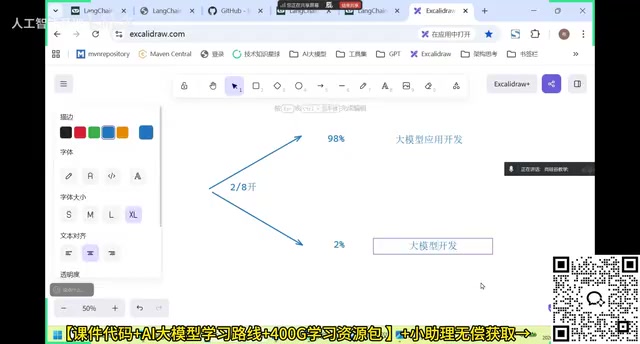
LangChain Practical Guide: From RAG Applications to Intelligent Agent Development
A comprehensive guide to LangChain: core concepts, RAG applications, Agent development, version selection (0.3/1.0), and career opportunities for Java/Python developers entering LLM development.
Read more →

·3 min
Will Vibe Coding Ruin Programmers? Coding Anxiety and How to Break Through in the AI Era
As Vibe Coding rises, many developers can't write code without AI. We break down the risks, whether traditional coding skills still matter, and how to rebuild them.
Read more →

·5 min
GPT-5.6 In-Depth Field Test: A Real-World Log After Burning Through $200K
A developer stress-tested GPT-5.6 for six weeks across 67 projects, burning $180K-$240K in inference. Real cases of task persistence, Rust rewrites, autonomous browser control — plus honest frontend and 3D shortfalls.
Read more →