#LLM orchestration layer
1042 related articles

·3 min
Building an AI Agent into Your Custom CRM: How to Pick the Most Practical First Feature
When building an AI-native CRM, what should the first AI Agent feature be? This guide recommends Lead Triage & Enrichment as the best starting point, with practical architecture advice.
Read more →

·3 min
Screenify Studio: Using Natural Language to Drive AI-Automated Product Demo Recording
Screenify Studio is a Mac AI screen recording tool that lets you describe demo flows in natural language, then AI agents automatically record and add cinematic 3D effects for professional product demos.
Read more →

·4 min
Real-World Challenges and Strategies for Production-Grade RAG Systems
Deep dive into core challenges of production-grade RAG systems, covering retrieval quality, hybrid search, offline evaluation, production monitoring metrics, latency-cost trade-offs, and security controls.
Read more →
·2 min
Warren: Isolated Runtime Infrastructure Built for AI Coding Agents
Warren is an open-source infrastructure project providing isolated workspaces, resource limits, real-time observability, and Git delivery for AI coding agents running securely in your own environment.
Read more →

·3 min
RAG Isn't as Complex as You Think: A Back-to-Basics Practical Guide
RAG's core logic is deceptively simple: retrieve relevant content, inject it into the prompt, and let the model generate. Learn why developers overcomplicate RAG and how to ship fast with a minimal approach.
Read more →

·2 min
Qencode MCP: Using Natural Language to Drive AI-Powered Video Transcoding and Processing
Qencode MCP integrates cloud video processing into the AI Agent ecosystem via Model Context Protocol, enabling natural language-driven video transcoding, analysis, editing, optimization, and delivery.
Read more →
·3 min
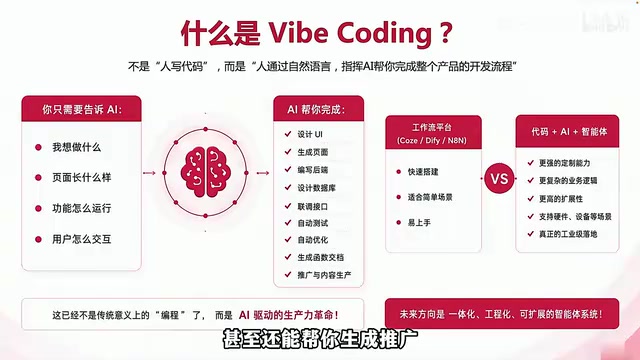
Vibe Coding Practical Guide: AI Full-Stack Development for Building a One-Person Company
A deep dive into Vibe Coding: from requirements analysis, UI design, multi-platform deployment to AI-automated operations. Master the full-stack AI development loop for one-person companies.
Read more →

·3 min
Run Multiple Open-Source OCR Models via a Unified API: 100K Pages for Just $60
VLM.run wraps open-source OCR models like DeepSeek-OCR-2, GLM-OCR, and dots.mocr into a unified OpenAI-compatible API. Parse 100K pages for just $60 with JSON output and MCP server support.
Read more →

·3 min
Getting Started with AI and Large Language Models from Scratch: A Complete Learning Roadmap
A complete roadmap for learning AI, machine learning, and LLMs from scratch—covering math foundations, Python, top courses, hands-on projects, and community resources for beginners.
Read more →

·2 min
Gemini 3.7 Flash Deep Dive: Major Upgrades in Coding, Debugging, and Agent Capabilities
Deep dive into Google Gemini 3.7 Flash: enhanced coding and debugging, more stable multi-step agent execution, and high-fidelity design-to-code generation for developers.
Read more →

·3 min
Practical Roadmap for Backend Engineers Transitioning to AI Agent Engineers: Four Steps to Landing a High-Paying LLM Position
A practical 4-step roadmap for backend engineers to transition into AI Agent roles: from LLM API calls and tool orchestration to production-grade Agent systems.
Read more →
·3 min
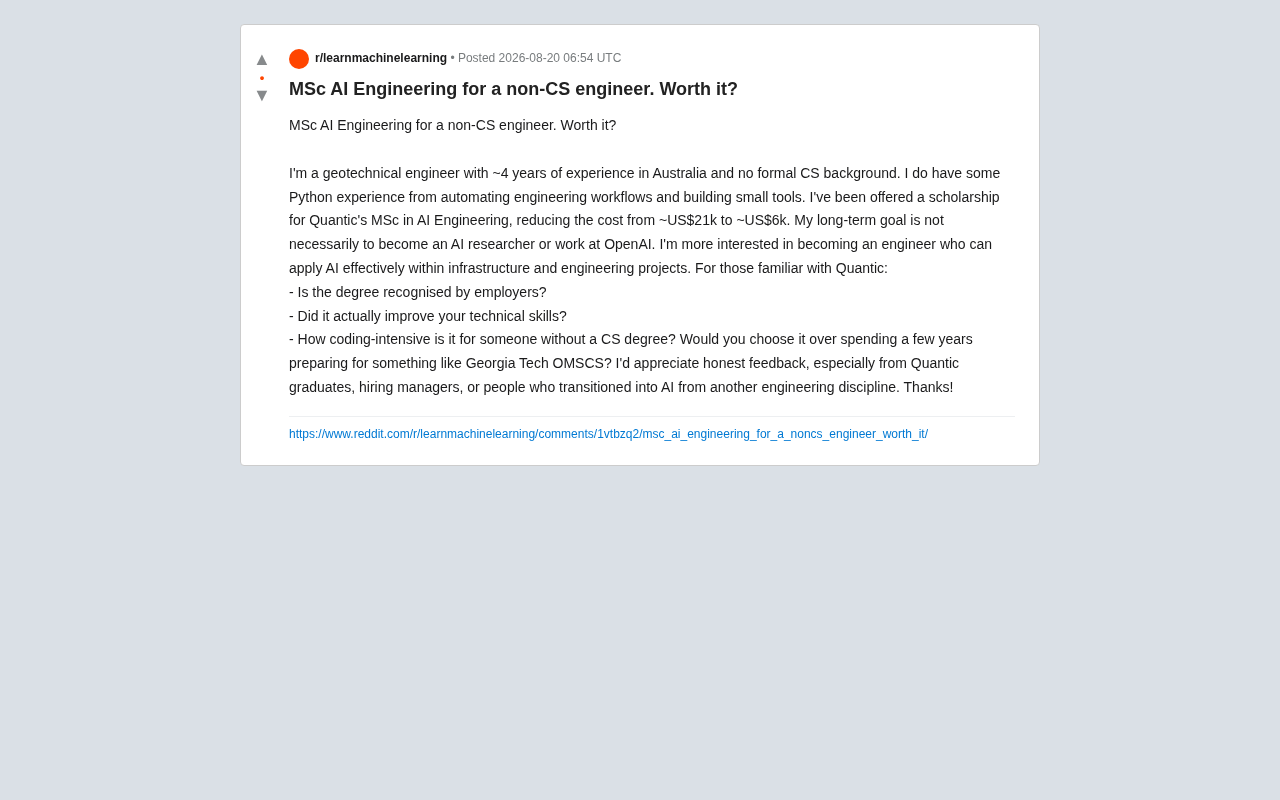
Is an AI Master's Worth It for Non-CS Engineers? Quantic vs OMSCS Deep Comparison
Should non-CS engineers pursue an AI master's? Deep comparison of Quantic AI Engineering vs Georgia Tech OMSCS, analyzing degree recognition, programming barriers, and ROI for traditional engineers transitioning to AI.
Read more →

·4 min
Building AgentOS with Claude Agent SDK: Automating 95% of Development and Operations Work
Developer Danny Postma built AgentOS on Claude Agent SDK, automating 95% of coding and ops tasks. Deep dive into container isolation, permission control, task orchestration, and human-in-the-loop design.
Read more →

·3 min
Headlong: A Microharness for Persistent Agents
Deep dive into Headlong's microharness design for persistent Agents, covering state management, failure recovery, execution loops, and key engineering practices for building long-running AI Agents.
Read more →

·3 min
LangChain in Practice: A Complete Guide to Building Safe and Controllable AI Agents
Deep dive into LangChain's three-layer ecosystem (LangGraph, LangChain, DeepAgents), with detailed coverage of Guardrail and HITL safety strategies for building secure, controllable AI Agents.
Read more →

·2 min
Multi-Agent Architecture Hands-On Experience: The New Hard Requirement for AI Engineer Job Seekers
Based on 1,700+ student data and 625 interview debriefs, learn how multi-Agent architecture has become a key screening criterion for AI positions and what interviewers really evaluate.
Read more →

·4 min
Harness Engineering: A New Paradigm for Multi-Agent Architecture Explained
Deep dive into Harness Engineering's seven core capabilities including tool calling, memory, planning, execution loops, and sandbox security. Learn the evolution from Prompt Engineering to Context Engineering to Harness Engineering.
Read more →

·4 min
LangChain in Practice: Why It Remains the Core Framework for Agent Development
Why learning the LangChain framework beats chasing AI tools like Cursor and Claude Code. Covers Agent development thinking, token planning, and LangGraph.
Read more →

·4 min
MLOps Interview Prep Guide: Distributed Training, GPU Scheduling & System Design Explained
A systematic guide to MLOps interview prep covering distributed training, GPU scheduling, ML infrastructure design, a 4-week study plan, and mock interview strategies.
Read more →

·3 min
Codex Harness Goes Open Source: AI Moats Shift from Models to Runtimes
OpenAI open-sources Codex Harness with Rust core, app server, and full AST processing. Same model scores nearly 3x higher on ARC-AGI-3, saves 6x tokens. Deep analysis of Codex vs DeepSeek Harness.
Read more →