#cross-validation
88 related articles

·7 min
Training Machine Learning Models from Scratch: A Complete Beginner's Guide
A complete walkthrough of training machine learning models from scratch—covering problem definition, data preprocessing, algorithm selection, hyperparameter tuning, and evaluation, with tool recommendations for beginners.
Read more →

·4 min
From Engineer to Machine Learning Practitioner: A Practical Roadmap from Data Compliance to Deployment
Have an engineering or data background and want to transition to machine learning? This article covers data anonymization compliance essentials, knowledge base tech route selection (RAG/traditional ML/BI), and a phased practical learning path.
Read more →

·2 min
GPT-5.6 Opens to All: Three-Tier Model Lineup + ChatGPT Work Agent Reimagines the Workflow
OpenAI launches GPT-5.6 with three tiers — Sol, Terra, Luna. Terra cuts price in half; Luna inputs at $1/M tokens. ChatGPT Work agent automates tasks end-to-end; Codex merges into a unified platform.
Read more →

·3 min
GPT-5.6 Deep Dive: Sol Flagship Model Performance, Weaknesses, and Competitive Analysis
Deep dive into GPT-5.6 (Sol/Terra/Luna): one-shot complex coding, agentic workflows, benchmark wins over Claude — but hallucination and vision still lag. Must-read for developers.
Read more →

·4 min
How to Choose a Machine Learning Course for Beginners: A Complete Roadmap
Not sure where to start with machine learning? This guide covers the community-approved ML roadmap: from math and Python basics to Andrew Ng, fast.ai, Kaggle, and CS229.
Read more →

·3 min
K-means vs Random Forest: How to Choose the Right Algorithm from First Principles
A machine learning exam question pitting K-means against Random Forest sparks debate. Learn the core difference between supervised and unsupervised learning, and how to choose the right algorithm for mixed-feature tasks.
Read more →

·5 min
GPT-5.6 Trio Released: A Deep Dive into Sol/Terra/Luna and the Breakthrough in Design Judgment
OpenAI officially releases the GPT-5.6 series with three models: flagship Sol, balanced Terra, and economy Luna. A deep dive into its core breakthroughs—a step change in design judgment and enhanced computer-use capabilities.
Read more →

·2 min
GLM-5.2 Spotted in Testing | Claude Fable 5 Launches: 4 Key AI Updates
GLM-5.2 spotted in testing, Anthropic launches Claude Fable 5, Moore Threads open-sources MusaCoder for domestic GPUs, and Google releases Gemini real-time translation.
Read more →
·6 min
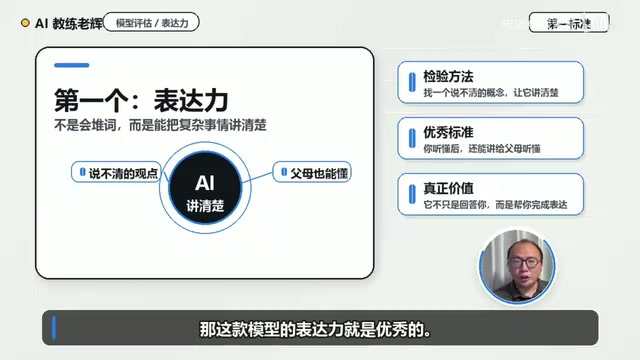
Forget Benchmark Scores! Four Practical Standards to Judge an LLM's Real Capability
High benchmark scores don't mean an LLM is actually useful. This article shares four field-tested standards—expressiveness, insight, cognitive depth, and problem-solving—to help you find the AI that truly fits you.
Read more →

·4 min
Getting Started with AI Agent Development: Core Mindset and Learning Path for Beginners
Intimidated by AI Agent development? This article breaks down the two biggest beginner pain points and reveals why the real skill isn't memorizing APIs, but mastering requirement decomposition, workflow design, and problem-solving.
Read more →

·4 min
Claude Science Launch: Anthropic's AI Assistant Built for End-to-End Scientific Research
Anthropic launches Claude Science (beta), a research-focused AI app with artifact traceability, on-demand environments, and 60+ scientific database integrations.
Read more →

·3 min
OpenAI's Official Plugin codex-plugin-cc: Calling Codex Inside Claude Code for Dual-AI Collaboration
OpenAI's open-source codex-plugin-cc plugin lets developers call Codex inside Claude Code for code review and task delegation. 22K+ GitHub stars signal AI coding's multi-model era.
Read more →

·4 min
Hunyuan Hy3 Goes Open Source + GPT-5.6 Leaked + Japan's Robot Strategy: AI Breaks Through on Multiple Fronts
Tencent Hunyuan 3 open-sourced with 295B MoE; GPT-5.6 Sol Ultra may bring multi-subagent collaboration to Codex; Alibaba FunASR upgraded; Japan plans 10M AI robots by 2040.
Read more →
·3 min
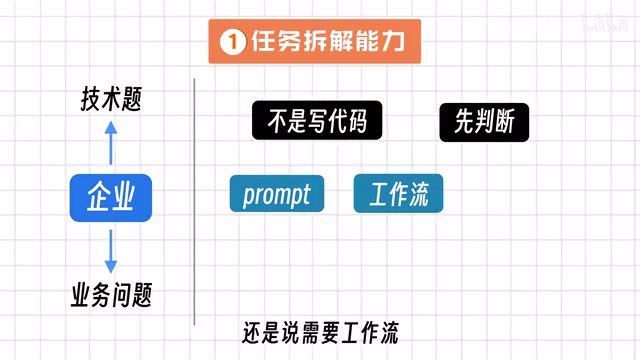
4 Core Competencies Every High-Value LLM Application Engineer Must Have
Why can't companies find qualified AI engineers? Discover the 4 core competencies every high-value LLM application engineer needs: task decomposition, tool calling, observability, and production readiness.
Read more →

·6 min
Can AI Antivirus Cure the Chronic Pop-Up Problem? An In-Depth Hands-On Review of Wukong Security
Struggling with Windows pop-ups and rogue software? This in-depth review of Wukong Security reveals how AI antivirus breaks past traditional virus-database limits, blocking ads and bundleware in real time, plus a comparison of five repair shops.
Read more →

·6 min
Benchmarking as Data Activation: Giving Domain Data a Direction to Climb
How benchmarking transforms dormant domain data into an AI optimization engine. From healthcare to law to manufacturing, building vertical benchmarks activates proprietary data and builds a strategic moat.
Read more →

·3 min
GLM-5.2 vs GPT-5.5: Solving the Mind Map Vertical Centering Problem — A Real-World Comparison
A developer found GPT-5.5 couldn't fix a mind map vertical centering bug, but GLM-5.2 solved it quickly. This article analyzes the capability differences and the value of multi-model collaboration in AI-assisted programming.
Read more →

·6 min
How AI Rumors 'Killed' Jim Carrey: A Trust Crisis in the Age of Search
Jim Carrey was 'declared dead' by AI rumors, revealing how AI-generated content and SEO content farms systematically pollute the information ecosystem.
Read more →

·6 min
AMD MI355X Running GLM5.2: Inference Costs at Half of NVIDIA Blackwell
AMD MI355X achieves 2,626 tokens/sec throughput running GLM5.2 at half the TCO of NVIDIA Blackwell. Deep analysis of the technical logic, ROCm ecosystem progress, and market implications.
Read more →

·3 min
Claude Sonnet 5 Hands-On Review: The Hidden Token Trap That Makes 'Low Cost' an Illusion
Claude Sonnet 5 promises near-Opus 4.8 performance at lower cost, but hands-on tests reveal a critical trap: a new tokenizer inflates token consumption, making real costs far higher than expected.
Read more →