#full-stack ML
422 related articles

·4 min
Tencent Open-Sources Agent Memory: A Fully Local AI Long-Term Memory Solution with Zero External Dependencies
Tencent Cloud open-sources TencentDB Agent Memory — a fully local AI Agent memory system with a 4-tier progressive pipeline, zero external API dependencies, and 8,100+ GitHub Stars. Ideal for finance, healthcare, and privacy-sensitive use cases.
Read more →

·6 min
Cursor Meets Grok 4.5: A Hands-On Test of an AI Coding Assistant That's 5x Faster with Cleaner Output
A developer deeply tests Grok 4.5 High Fast in Cursor, finding it rivals Claude Opus in quality but runs 5x faster with cleaner, filler-free output. Full hands-on review and analysis.
Read more →

·4 min
AI Agent Learning Path for Beginners: From Theory to Real-World Practice
A complete AI Agent learning roadmap covering BDI theory, core components (Perception/Planning/Execution), AutoGen multi-agent frameworks, and DeepSeek RAG projects for beginners.
Read more →

·4 min
OpenAI Sites: Turn Ideas into Published Websites Instantly — No Coding Required
OpenAI's new Sites tool lets anyone describe an idea and instantly generate a live, shareable website or lightweight app — no coding skills needed.
Read more →

·2 min
GLM-5.2 Spotted in Testing | Claude Fable 5 Launches: 4 Key AI Updates
GLM-5.2 spotted in testing, Anthropic launches Claude Fable 5, Moore Threads open-sources MusaCoder for domestic GPUs, and Google releases Gemini real-time translation.
Read more →

·6 min
What Is an FDE? Decoding the Most Sought-After Hybrid Engineer in the AI Deployment Era
FDE (Forward Deployed Engineer) is the hottest emerging role in the AI deployment wave, combining a technical CTO, full-stack AI engineer, and business consultant. Learn the two FDE tracks, core skills, and how to transition into one.
Read more →

·4 min
AI Weekly: GPT-5.6 Launches in Three Tiers, Open-Source Inference Frameworks and Robot Safety Break Through Across the Board
This week in AI: OpenAI launches GPT-5.6 in three tiers (Sol/Terra/Luna) hitting 91.9% on coding benchmarks; DeepSeek and PKU open-source DSpark for 85% faster inference; Prime Intellect trains trillion-param models on just 28 H200s; Anthropic Claude enters Slack.
Read more →

·4 min
Agent Skills Deep Dive: A Complete Guide to Modular Agent Development Architecture
A deep dive into Anthropic's Agent Skills architecture — clarifying its difference from MCP, and how modular Skill packages enable scalable, maintainable enterprise agent development.
Read more →

·6 min
Made by Google Event Confirmed: New Pixel Phones with AI Capabilities Coming Soon
Google confirms the Made by Google hardware event in NYC, unveiling next-gen Pixel phones with new Tensor chips and deep Gemini AI integration. On-device AI gets a major upgrade.
Read more →
·7 min
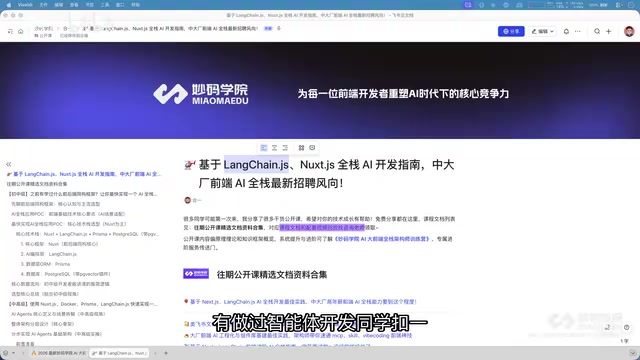
LangChain.js + Nuxt.js: An AI Full-Stack Advancement Path for Frontend Engineers
Frontend hiring now treats AI capabilities as a core assessment, covering RAG knowledge bases, AI Agent development, and LangChain.js engineering. Learn how LangChain.js + Nuxt.js helps frontend developers build memory- and retrieval-capable AI full-stack apps.
Read more →

·7 min
Electron + LangGraph in Practice: Building an AI Agent Visual Orchestration App from Scratch
A hands-on guide to building an enterprise-grade AI Agent workflow orchestration app with Electron Forge and LangGraph, covering local LLM deployment (Qwen3-0.6B), node-based visual canvas design, and full Function Calling integration.
Read more →

·7 min
Building AI Agent Frameworks with TypeScript: The Core Development Paradigm for Full-Stack Developers
An in-depth look at why TypeScript is the top choice for AI Agent development: covering Zod structured output validation, LangGraph's graph state machine design, and a full learning path for front-end devs transitioning to full-stack AI.
Read more →

·7 min
Learning Python from Scratch: A Complete Guide to the Three-Stage Learning Path
Want to learn Python from scratch but don't know where to begin? This article breaks down three stages—basic syntax, advanced mastery, and hands-on practice—with real projects in crawling, automation, and data analysis to help you build programming thinking.
Read more →

·3 min
Google AI Monthly Roundup: Multimodal, Agents, and Developer Ecosystem Accelerate on All Fronts
A deep dive into Google's latest AI monthly updates: Gemini multimodal upgrades, AI Agent breakthroughs, product ecosystem integration, and developer toolchain improvements.
Read more →

·2 min
Unsloth v0.1.45 Released: Gemma 4 MTP Acceleration, Cross-Platform Fixes, and Studio Upgrades
Unsloth v0.1.45-beta adds Gemma 4 MTP support, AMD ROCm & NVIDIA Blackwell fixes, a new Hub download manager, and a compact RAG system for local LLM fine-tuning.
Read more →
Google Drops Two New Models: 4-Second …
·4 min
Google Drops Two New Models: 4-Second Image Generation + Real-Time Video Creation Explained
Google launches Imagen 3 Nano (Flash) for 4-second text-to-image generation and Veo 3 Flash for conversational video editing — now available via Gemini API and Google AI Studio.
Read more →

·3 min
GLM-5.2 vs GPT-5.5: Solving the Mind Map Vertical Centering Problem — A Real-World Comparison
A developer found GPT-5.5 couldn't fix a mind map vertical centering bug, but GLM-5.2 solved it quickly. This article analyzes the capability differences and the value of multi-model collaboration in AI-assisted programming.
Read more →

·6 min
GLM 5.2 Arrives: Industry Upheaval on the Eve of AI Margin Collapse
The rise of Zhipu's GLM 5.2 is accelerating the democratization of LLM capabilities. This article analyzes the commoditization of foundation models, the logic behind margin collapse, and the opportunities and challenges facing application-layer and foundation model firms.
Read more →

·6 min
Getting Started with LangChain: Unified Interfaces and Agent Development Explained
A beginner's guide to the LangChain open-source framework: explaining how to use the init_chat_model unified interface, tips for disabling DeepSeek's thinking mode, and core essentials of Agent development.
Read more →

·3 min
AI Agent Architecture Decoded: An Engineering Guide from Conversations to Automation
A deep dive into the four-layer engineering design of AI Agents: planning, memory, tool use, API cost optimization, MCP protocol integration, and Skill encapsulation.
Read more →