#interest rates
2001 related articles

·4 min
Building an AI Digital Employee Customer Service System: Full Project Retrospective — 30-Day Delivery for $11K
A detailed retrospective of a real AI customer service commercialization case: 2-person team, 30-day delivery, $11K budget. Deep dive into tech stack, RAG architecture, and AI-human routing design.
Read more →

·5 min
Theo's Playbook: Using Markdown Instruction Files to Make AI Truly Understand Your Development Intent
Tech creator Theo shares how writing agents.md, CLAUDE.md, and custom Skills—combined with AI-audited failure patterns—systematically improves AI coding collaboration.
Read more →

·4 min
How a Hugging Face Engineer Automated His Team's Entire Workflow with AI Agents
Hugging Face ML engineer Niels shares how he automated his Community Science Team's workflow using AI Agents, from deterministic Workflows to autonomous Agents.
Read more →

·3 min
Memorex Code Open-Sourced: Giving Coding Agents Long-Term Memory
Memorex Code is an open-source long-term memory system for Coding Agents, solving cross-session memory loss. Features auto-recall, deduplication, and local codebase scanning for Cursor, Claude Code, and more.
Read more →

·2 min
OpenAI Funds 14 Projects: An Evidence-Based Approach to AI-Driven Economic Opportunity
OpenAI funds 14 independent projects across employment, public safety, science, and democratic accountability to test how AI can expand economic opportunity with real-world evidence.
Read more →

·1 min
PawVis: An Open-Source Tool for Controlling Your Mac with Webcam Gestures
PawVis is a free open-source Mac gesture control tool that uses your built-in webcam to track hand movements for cursor control, clicking, and scrolling — 100% local, with voice control and AI Agent integration.
Read more →

·2 min
Annotate: A New Tool That Turns Screen Recordings into AI Coding Prompts
Annotate is a free local-first tool that turns screen recordings with annotations and voice into multimodal prompts for AI coding agents like Cursor, Claude, and Codex.
Read more →

·3 min
The Cursor Agents Window Controversy: The Tug-of-War Between AI Coding Efficiency and Developer Control
Cursor's push for Agents Window sparks developer backlash. Does running multiple AI Agents in parallel truly boost coding efficiency? An in-depth look at the tension between efficiency and control.
Read more →

·2 min
What It Means That Nemotron's 2-Bit Quantized 30B Model Sustained Tool Calling for 10 Minutes
NVIDIA Nemotron 3.5 Lightning sustained tool calls for 10+ minutes after extreme 2-bit quantization, revealing surprising robustness of low-bit models for Agent tasks and local deployment.
Read more →

·3 min
The $4.1 Trillion AI Infrastructure Gamble: Power Is the Real Bottleneck
UBS predicts $4.1T in global AI infrastructure investment by 2028, but grid interconnection queues — not chip shortages — may be the harder constraint to solve.
Read more →
·2 min
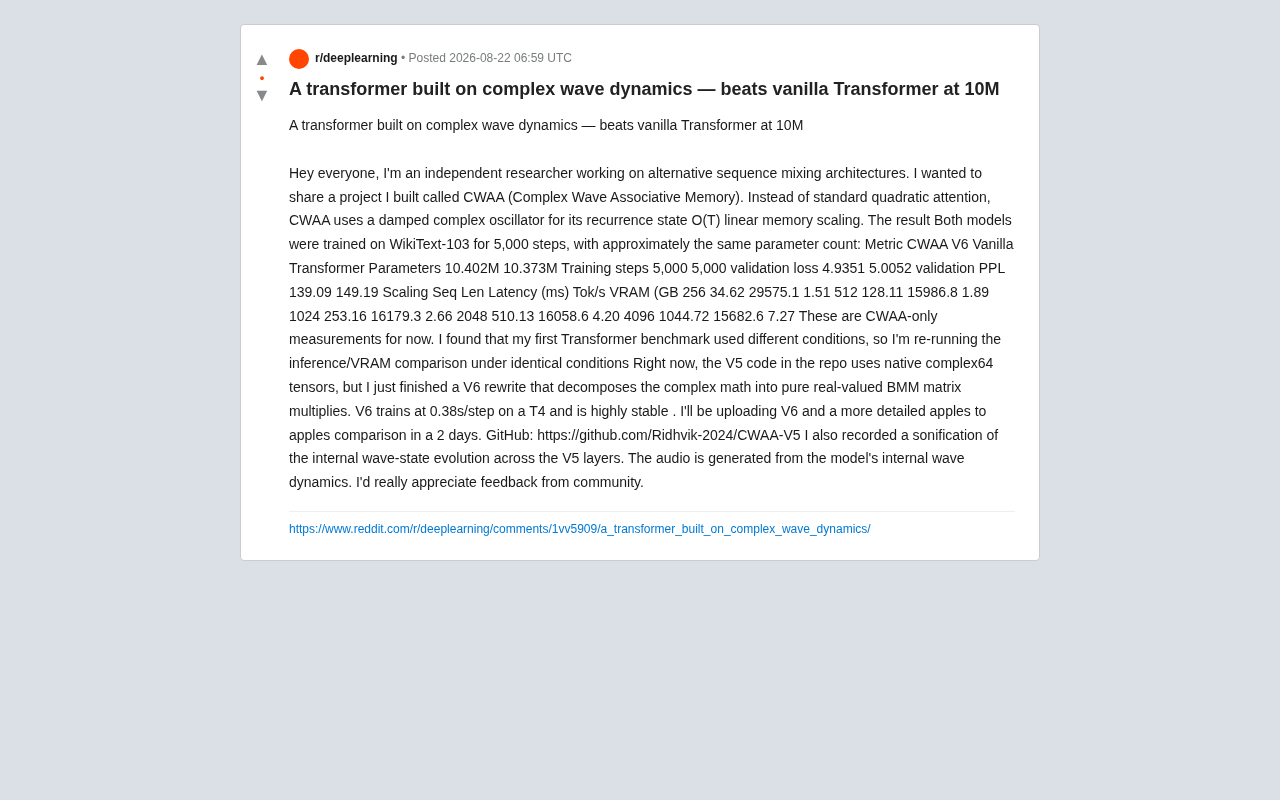
CWAA Architecture Explained: Replacing Transformer Attention with Complex Wave Dynamics
Deep dive into CWAA (Complex Wave Associative Memory), an architecture replacing Transformer self-attention with damped complex oscillators. At 10M parameters, it shows ~7% better perplexity with O(T) linear memory scaling.
Read more →

·2 min
Qwen3.8-27B Becomes the Most Popular Open-Source Model in History: A Dominant Lead Over DeepSeek-R1
Qwen3.8-27B becomes the most-used open-source model on Unsloth, far surpassing DeepSeek-R1 and Qwen3.6-35B-A3B. Deployable on consumer GPUs after quantization, it's now the top choice for developers.
Read more →
·2 min
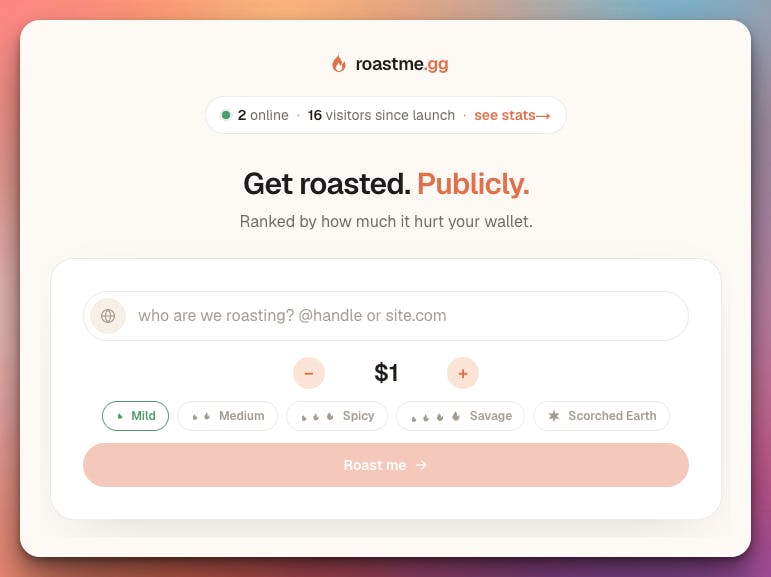
roastme.gg: How a Counterintuitive Product That Charges Users to Get Publicly Roasted by AI Engineered Viral Spread
Deep dive into roastme.gg's product design: users pay $1-$1000 to get publicly roasted by Claude AI, leveraging leaderboards and social cards for viral spread. Exploring AI entertainment business models.
Read more →

·3 min
Stripe Acquires OpenRouter for $7.5B, Binance Lets AI Trade Crypto Automatically — AI Shifts from Showmanship to Takeover
Stripe acquires model routing platform OpenRouter for $7.5B, Binance launches AI agent OS for automated trading, Beijing robot conference enters procurement day. AI shifts from demos to real business takeover.
Read more →

·3 min
Vercel Zero: A Programming Language Designed Specifically for AI Agents
Vercel releases experimental language Zero, replacing traditional source code with semantic program graphs for AI agents to operate on structured graphs instead of editing strings.
Read more →

·3 min
Crankwave: A Detailed Look at the Open-Source Engine Sound Simulation and Baking Tool
An in-depth look at Crankwave, an MIT-licensed open-source engine sound simulator and audio baking tool supporting JSON config, WASM execution, deterministic baking, and simulator-free playback for game developers.
Read more →

·4 min
Claude Code vs Codex: A Deep Comparison to Help You Choose the Right AI Coding Assistant
Deep comparison of Claude Code vs Codex: architecture differences, behavior patterns, and use cases. Based on SWE-RPG benchmark data, choose the right AI coding assistant for your team.
Read more →

·3 min
Meta's Alleged Addictive Design: A Full Breakdown of the Hook, Hold, Harvest, and Hide Strategy
Meta lawsuit reveals a four-step product design strategy: Hook, Hold, Harvest, Hide. A deep analysis of addictive design in the attention economy and its ethical implications for the AI era.
Read more →

·2 min
GPT-5.6 Price Cut Over 20%: A Complete Analysis of AI Competition from OpenAI, DeepSeek Multimodal, and More
OpenAI cuts GPT-5.6 Sol prices by over 20%; Codex hits 20M active users with security scanning; DeepSeek launches V4 Flash Vision multimodal model; anonymous OS Alpha tops API call rankings.
Read more →

·2 min
Munder Difflin: A Multi-Agent Framework for Running a Virtual Office with AI Clones
Munder Difflin is an open-source multi-agent framework that lets users build a virtual office with AI clones. This article explores its Agent Harness architecture, role-based collaboration, and real-world challenges.
Read more →