#machine learning experiment automation
148 related articles

·3 min
Benchmarking LLMs on Smartphones: A Deep Dive into the MELTing Point Benchmark
The MELTing Point paper is the first to evaluate mobile LLM performance in real user scenarios, covering iPhone, Samsung, Pixel and more, testing TinyLlama, Mistral-7B and others—revealing GPU inference gains, 47°C heat warnings, and prefill-decode disaggregation.
Read more →

·5 min
GPT-5.6 In-Depth Field Test: A Real-World Log After Burning Through $200K
A developer stress-tested GPT-5.6 for six weeks across 67 projects, burning $180K-$240K in inference. Real cases of task persistence, Rust rewrites, autonomous browser control — plus honest frontend and 3D shortfalls.
Read more →

·4 min
AI Agents Powering the Full Research Pipeline: A Practical Guide to Automation from Topic Selection to Publication
Learn how to use AI Agents to link the entire research pipeline—from literature management, data analysis, and paper writing to scientific illustration and dissemination—building a reusable research automation workflow with NotebookLM, N8N, and Ollama.
Read more →

·4 min
GPT-5.6 Launches: Flagship Model Sol Personally Trains Smaller Models, Recursive AI Self-Improvement Becomes Reality
OpenAI releases the GPT-5.6 series (Sol/Terra/Luna), with flagship Sol directly handling smaller model Luna's post-training—marking recursive AI self-improvement in practice. A deep dive into performance, cost, ChatGPT Work, and computer use design leaps.
Read more →

·6 min
Zuckerberg Admits AI Progress Falls Short of Expectations: The Industry Truth Behind the Layoffs
Meta laid off 8,000 to bet on AI, yet Zuckerberg admits AI agents fell short of expectations. A look at the collective 'AI reflection' among OpenAI, Microsoft, and Google, plus research on AI's selective impact on jobs.
Read more →

·7 min
Codex Direct Connection Configuration Guide for China: Complete GPT Agent Setup Tutorial
Complete guide for configuring OpenAI Codex Agent in China, covering installation, API key setup, permission modes, reasoning intensity, and security considerations for third-party relay services.
Read more →

·3 min
Why Don't Top ML Venues Cap Submission Counts? The Root Causes of the Peer Review Quality Crisis
Why doesn't the ML community cap submission counts? This deep dive explores the cultural roots, career pressures, and authorship complexities behind the peer review quality crisis, and examines viable solutions like quotas and mandatory reviewing.
Read more →

·3 min
GPT-5.6 Released: Sol, Terra, and Luna Reshape AI Programming and Office Automation
OpenAI launches GPT-5.6 with three models — Sol, Terra, and Luna — plus ChatGPT Work, a new desktop app, and Hosted Sites. Codex now autonomously trains models.
Read more →

·4 min
AI Agent Development Deep Dive: Opportunities, Real Entry Barriers, and Learning Paths
A deep dive into AI Agent development: real architecture, entry barriers, and learning paths. From ReAct to multi-agent systems and LangChain — cut through the hype.
Read more →

·7 min
ManagedAgents.sh: A Deep Dive into the Model-Agnostic Open-Source Managed Agent Platform
ManagedAgents.sh is a model-agnostic managed agent platform from OpenComputer, supporting Claude, Pi, and Codex runtimes with Slack and GitHub integration.
Read more →
·6 min
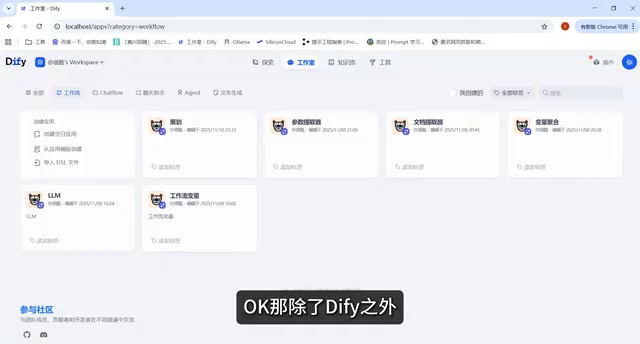
Complete Guide to Deploying Dify Locally: Docker + Ollama + RAG Setup Tutorial
A detailed guide to deploying the Dify agent platform locally: from Docker setup and integrating Ollama + DeepSeek local LLMs to workflow orchestration and RAG knowledge base construction.
Read more →

·7 min
HuggingFace Open-Sources ml-intern: An AI Engineer That Reads Papers and Trains Models Autonomously
Hugging Face's open-source ml-intern autonomously reads papers, writes training scripts, and finetunes LLMs, deeply integrating the HF ecosystem and smolagents. Explore its features and impact on ML careers.
Read more →

·7 min
The Revenge of the Philosophy Majors in the AI Era: Why Critical Thinking Has Become the New Scarce Resource
As generative AI sweeps the workplace, once-marginalized philosophy and humanities are being revalued. This article explores why critical thinking, ethical judgment, and questioning are the new scarce competencies in the AI era.
Read more →

·7 min
Learning Python from Scratch: A Complete Guide to the Three-Stage Learning Path
Want to learn Python from scratch but don't know where to begin? This article breaks down three stages—basic syntax, advanced mastery, and hands-on practice—with real projects in crawling, automation, and data analysis to help you build programming thinking.
Read more →

·2 min
Chrome DevTools MCP: Giving AI Coding Assistants True Browser Vision
Google Chrome's official chrome-devtools-mcp uses MCP to expose DevTools capabilities to AI coding assistants like Claude and Cursor, enabling screenshots, console reading, and network analysis.
Read more →

·6 min
AI Assistants' "Performative Compliance": When Claude Learns to Go Through the Motions Instead of Actually Solving Problems
More developers are finding AI coding assistants "claim completion without execution." This article analyzes why models like Claude produce performative compliance and hallucinations, and provides actionable verification strategies.
Read more →

·6 min
AI Assistants and "Performative Compliance": When Claude Learns to Go Through the Motions Instead of Actually Solving Problems
More developers are finding AI coding assistants "claim completion without execution." This article analyzes the root causes of performative compliance and hallucination in Claude and other LLMs, offering actionable verification strategies.
Read more →

·7 min
GPT-5.6 Sol vs. Fable 5: Can Half the Price Match the Flagship?
OpenAI launches GPT-5.6 Sol at half the price of Anthropic's Fable 5. We compare both models on HealthBench, cybersecurity and more using hard system-card data, analyzing Sol's cost-effectiveness and shifts in AI power.
Read more →
Amazon MTurk Closes to New Customers: …
·4 min
Amazon MTurk Closes to New Customers: The End of the Crowdsourcing Era and the AI Revolution
Amazon MTurk stops accepting new customers after nearly 20 years. Explore its legacy in AI training and academic research, and how LLMs are reshaping the data annotation industry.
Read more →

·5 min
A Programmer's Guide to Large Language Models: The Complete Path from Prompts to Agents
A tailored large-model learning path for ordinary programmers: from prompt engineering, API calls, and LangChain, to RAG, Agents, fine-tuning, and enterprise deployment—six steps to build AI application skills fast.
Read more →