#sub-agent collaboration
252 related articles

·4 min
5 Tips to Cut Claude Opus 5 Costs by Up to 80%
Opus 5 moving to API billing? 5 proven tips to cut token costs by up to 80%: lower Effort Level, architect-executor split, Ponytail compression, Deep Research, and Advisor Mode — while outperforming Opus 4.8.
Read more →

·6 min
GPT-5.6 Hands-On Deep Dive: Three-Tier Models + Ultra Multi-Agent, Codex Fully Evolved
OpenAI launches GPT-5.6 with three tiered models—Sol, Terra, and Luna—Ultra multi-agent parallel collaboration, Codex integrated into ChatGPT desktop, and an upgraded Computer Use.
Read more →

·3 min
Coze Deep Dive: A Complete Guide to the Agent Building Platform vs. Dify
A deep dive into ByteDance's Coze platform: tool categories, positioning vs. Dify, skill store, multi-agent collaboration, and workflow building — your AI Agent selection guide.
Read more →
·3 min
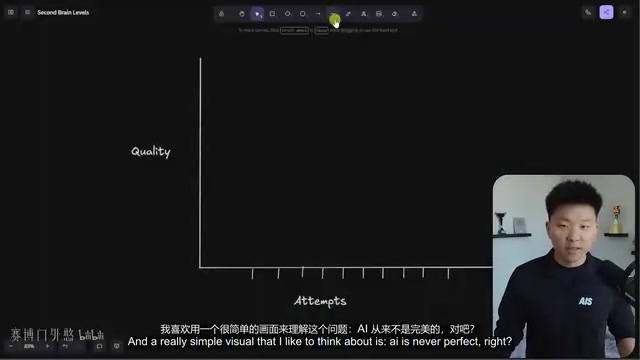
Agent Loop: A Design Guide for AI Autonomous Reasoning-Action-Verification Workflows
A deep dive into AI Agent Loops: from single loops to multi-agent collaboration. Master goal definition, validation mechanisms, and stop conditions to avoid blindly building agent fleets.
Read more →

·4 min
Codex Major Upgrade: GPT-5.6 Powers Full-Stack Development from Idea to Deployment
OpenAI Codex gets a major upgrade with GPT-5.6: extended reasoning, multi-agent parallelism, browser control, one-click Sites deployment, task orchestration, and mobile dev support.
Read more →
·2 min
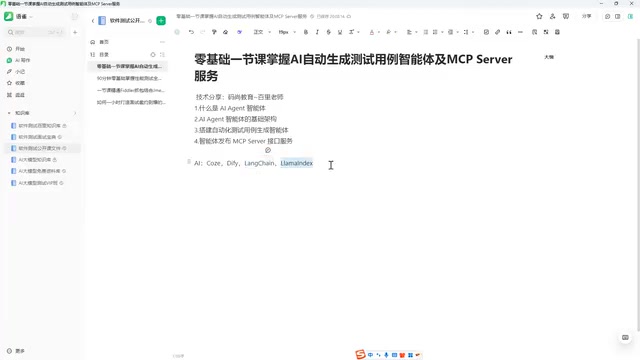
The Complete Guide to AI Agents: Concepts, Principles, and Top Development Tools
A deep dive into AI agents: core concepts, how they differ from LLMs, the Agent = LLM + Workflow + Knowledge Base formula, and a comparison of Coze, Dify, LangChain, and LlamaIndex.
Read more →

·3 min
Claude Code Practical Guide: Environment Setup, Git Workflows, and Engineering in Production
A complete guide to Claude Code: environment setup, switching to domestic LLMs, CLI commands, Git workflows, MCP, Subagents, and enterprise project walkthroughs.
Read more →

·3 min
Intent-Driven Development: Claude Code's Evolving Paradigm and Practical Tips
Anthropic engineer Lydia and YK Sugi break down Claude Code's Intent-Driven Development paradigm, covering dynamic workflows, auto mode, sub-agent orchestration, and the evolving role of software engineers in the AI era.
Read more →

·4 min
GPT-5.6 & OpenAI Super App Deep Dive: Loop Engineering as the New Paradigm Replacing Prompt Engineering
Deep dive into GPT-5.6 (Sol/Terra/Luna) and OpenAI's Super App: Loop Engineering, Parallel Agents, and Computer Use — unpacking the shift from prompt to loop engineering with real test cases and a startup framework.
Read more →
·2 min
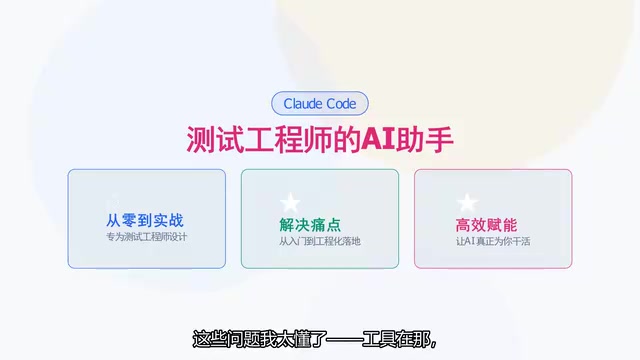
Claude Code for QA Engineers: A Practical Handbook from Basics to Engineering-Level Implementation
A practical Claude Code handbook built for QA engineers — covering environment setup, spec-driven development, Skill encapsulation, MCP integration, and AI test sub-agents across 10 core modules.
Read more →

·2 min
LangGraph Multi-Agent Architecture in Practice: From Core Components to Production Deployment
A deep dive into LangGraph multi-agent architecture — covering hierarchical, network, and pipeline patterns with three hands-on projects using LangGraph 0.3.
Read more →

·3 min
Codex Practical Guide: A Complete Roadmap from Beginner to Advanced AI Programming
Master Codex AI programming assistant with this complete guide: CLI setup, slash commands, agents.md governance, MCP protocol, multi-agent systems, and enterprise plugin development.
Read more →

·3 min
AirOps in Practice: Building Enterprise-Grade AI Agents with the Claude Agent SDK
How AirOps replaced traditional workflow builders with the Claude Agent SDK to build an AI agent platform for content marketers — covering three architectural iterations, harness engineering, and sub-agent context management.
Read more →

·3 min
Claude Code Enterprise Guide: Environment Setup, Git Workflows, and Switching to Chinese AI Models
Enterprise guide to Claude Code: CLI setup, switching to DeepSeek and other Chinese AI models, Git workflow automation, and bug fix loops to boost team productivity.
Read more →

·3 min
40-Hour Stress Test: An In-Depth Evaluation of GPT-5.6's Coding Capabilities
A developer spent 40 hours exhausting Codex Pro's weekly quota to benchmark GPT-5.6 on real enterprise projects. Key findings: proactive root cause tracing, stronger global codebase understanding, and stable long-task execution.
Read more →

·3 min
What Is Claude Code? A Five-Dimension Breakdown of AI Coding Assistants
Claude Code isn't just a chat AI — it reads your project files, edits code, and runs commands directly. See how it compares to ChatGPT and Cursor across 5 key dimensions.
Read more →

·3 min
The Truth About Codex Ultra Mode: It's Not a Reasoning Level
Deep dive into OpenAI Codex's Ultra mode: it's not a reasoning level but a system prompt switcher. Learn why Ultra burns tokens, the V1/V2 agent system issues, and how Claude Code Workflows gets it right.
Read more →

·3 min
From RAG to Agent: A Complete Architecture Guide for AI-Native Systems
A comprehensive guide to modern AI-native system architecture: LLM reasoning, three RAG paradigms (vector/knowledge graph/BM25), Agents, MCP tool calling, AI gateways, and observability for enterprise AI.
Read more →

·3 min
Deep Dive into ChatGPT Ultra's Parallel Sub-Agent Architecture: Parameters, Configuration, and Best Practices
A deep dive into ChatGPT Ultra mode's parallel sub-agent architecture, covering concurrency limits, delegation depth, token optimization, and configuration best practices for GPT-5.6.
Read more →
·3 min
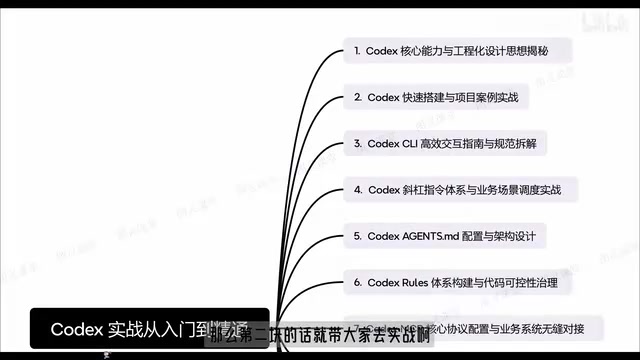
The Complete OpenAI Codex Practical Guide: From Installation to Enterprise Deployment
A complete guide to OpenAI Codex: CLI setup, slash commands, AGENTS.md, MCP integration, multi-agent collaboration, and a RAG customer service project walkthrough.
Read more →