#sub-agent collaboration
260 related articles

·3 min
AirOps in Practice: Building Enterprise-Grade AI Agents with the Claude Agent SDK
How AirOps replaced traditional workflow builders with the Claude Agent SDK to build an AI agent platform for content marketers — covering three architectural iterations, harness engineering, and sub-agent context management.
Read more →

·3 min
Claude Code Enterprise Guide: Environment Setup, Git Workflows, and Switching to Chinese AI Models
Enterprise guide to Claude Code: CLI setup, switching to DeepSeek and other Chinese AI models, Git workflow automation, and bug fix loops to boost team productivity.
Read more →

·3 min
40-Hour Stress Test: An In-Depth Evaluation of GPT-5.6's Coding Capabilities
A developer spent 40 hours exhausting Codex Pro's weekly quota to benchmark GPT-5.6 on real enterprise projects. Key findings: proactive root cause tracing, stronger global codebase understanding, and stable long-task execution.
Read more →

·3 min
What Is Claude Code? A Five-Dimension Breakdown of AI Coding Assistants
Claude Code isn't just a chat AI — it reads your project files, edits code, and runs commands directly. See how it compares to ChatGPT and Cursor across 5 key dimensions.
Read more →

·3 min
The Truth About Codex Ultra Mode: It's Not a Reasoning Level
Deep dive into OpenAI Codex's Ultra mode: it's not a reasoning level but a system prompt switcher. Learn why Ultra burns tokens, the V1/V2 agent system issues, and how Claude Code Workflows gets it right.
Read more →

·3 min
From RAG to Agent: A Complete Architecture Guide for AI-Native Systems
A comprehensive guide to modern AI-native system architecture: LLM reasoning, three RAG paradigms (vector/knowledge graph/BM25), Agents, MCP tool calling, AI gateways, and observability for enterprise AI.
Read more →

·3 min
Deep Dive into ChatGPT Ultra's Parallel Sub-Agent Architecture: Parameters, Configuration, and Best Practices
A deep dive into ChatGPT Ultra mode's parallel sub-agent architecture, covering concurrency limits, delegation depth, token optimization, and configuration best practices for GPT-5.6.
Read more →
·3 min
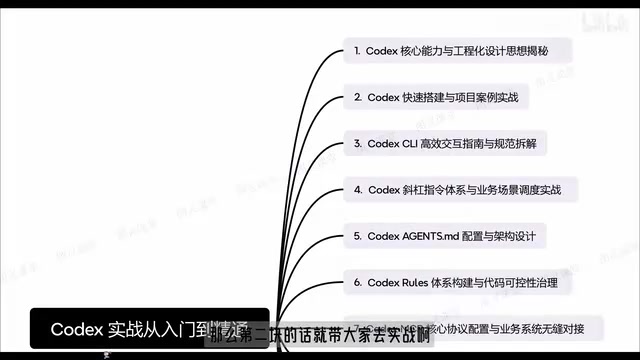
The Complete OpenAI Codex Practical Guide: From Installation to Enterprise Deployment
A complete guide to OpenAI Codex: CLI setup, slash commands, AGENTS.md, MCP integration, multi-agent collaboration, and a RAG customer service project walkthrough.
Read more →

·3 min
GPT-5.6 Proves 50-Year Math Conjecture in One Hour — AI Independently Cracks a Scientific Problem
GPT-5.6 Sol Ultra proved the 50-year-old Cycle Double Cover Conjecture in one hour for under $500. Plus: Apple sues OpenAI, Google open-sources Gemma 4, and Zhipu AI targets AGI.
Read more →

·3 min
Can GPT-5.6 Prove a 50-Year Graph Theory Conjecture? The Boundaries and Verification of AI Mathematical Reasoning
GPT-5.6 Soul Ultra claims to prove the 50-year-old Cycle Double Cover Conjecture in under an hour using 64 parallel agents. We examine the technical path, missing peer review, and formal verification gaps.
Read more →

·2 min
GPT-5.6 Used 64 Sub-Agents to Tackle a Graph Theory Conjecture — How Far Are We from a Real Proof?
GPT-5.6 Soul Ultra used 64 parallel sub-agents to generate a proof draft for the Cycle Double Cover Conjecture in one hour. We break down the multi-agent pipeline and explain what's still missing before this counts as a real mathematical result.
Read more →

·3 min
Complete Codex Practical Guide: From Getting Started to Enterprise-Grade AI Programming
Master OpenAI Codex end-to-end: CLI setup, slash commands, AGENTS.md design, MCP protocol, multi-agent coordination, and enterprise plugin development.
Read more →

·4 min
LangChain V1.3 in Practice: Master AI Engineering Thinking and Break Free from Tool Dependency
LangChain V1.3 course deep-dive: why engineering thinking beats tool-chasing. Covers RAG accuracy myths, Token cost control, and LangChain/LangGraph/Deep Agent breakdowns.
Read more →

·3 min
In-Depth Review of GPT 5.6 Soul: Sub-Agent Systems, Government Review, and Competitor Comparison
In-depth analysis of GPT 5.6 Soul: multi-sub-agent parallel architecture, Ultra Mode coding in practice, the controversy behind its 91.9% Terminal Bench score, and the trend of frontier AI entering government review.
Read more →

·3 min
Decoding Databricks' AI Strategy: The Omnigents Orchestration Platform and LTAP Unified Storage Architecture
An in-depth look at the AI strategy of Databricks co-founders Matei Zaharia and Reynold Xin: the open-source Agent platform Omnigents, the unified storage architecture LTAP, and how Dream Engine reshapes data and intelligence.
Read more →

·3 min
GPT 5.6 + Codex In-Depth Review: Three-Tier Models and Ultra Mode Fully Explained
GPT 5.6 updates Codex with Sol/Terra/Luna model tiers, Ultra thinking mode, 350K context, and stronger autonomous loops. Full hands-on review of all core upgrades.
Read more →

·2 min
AI Agent Learning Path: Mastering Intelligent Agent Development from 0 to 1
Many people learn tons of fragmented content yet remain confused. This article maps out the complete AI Agent knowledge landscape—from LLM and prompt basics, tool calling, and RAG to LangChain and multi-agent collaboration—with a clear learning order.
Read more →

·6 min
GPT-5.6 Sol Hands-On: How Multi-Agent Parallelism Is Reshaping AI Coding Workflows
Based on Fireship's review, an in-depth look at GPT-5.6 Sol's Ultra Mode multi-agent parallelism, its 91.9% Terminal Bench score, and how it differs from Claude Fable in cost, speed, and precision.
Read more →

·3 min
SlickToken: A Deep Dive into GPU Fleet and Agentic Workflow Planning
SlickToken is a GPU fleet and agentic workflow planning tool for AI teams, supporting offline simulation, load testing, and capacity planning—no internet required to protect enterprise data.
Read more →

·4 min
GPT-5.6 Released: Coding Benchmarks Surpass Rivals, Inference Speed 10x Faster
Just 12 days after a rival launch, OpenAI released GPT-5.6, scoring 91.9% on Terminal-Bench 2.1 to surpass competitors. Ultra mode supports multi-agent collaboration, inference hits 750 tokens/sec.
Read more →