#web development basics
104 related articles

·2 min
The Complete AI Agent Development Roadmap: A Four-Stage Guide from Zero to Production
A complete four-stage AI Agent development roadmap: from LLM fundamentals and core modules, to ReAct/CoT paradigms, multi-agent collaboration, and real-world projects.
Read more →
YouTrackDB Deep Dive: Core Features an…
·3 min
YouTrackDB Deep Dive: Core Features and Use Cases of an Object-Oriented Graph Database
YouTrackDB is a general-purpose object-oriented graph database combining OOP paradigms with graph data models, supporting classes, inheritance, and polymorphism for knowledge graphs, social networks, and recommendation systems.
Read more →

·2 min
A Deep Dive into Ansible: The Essential Guide to Agentless IT Automation
A comprehensive guide to Ansible, the open-source IT automation platform: core architecture, design philosophy, and use cases. Learn about agentless mode, YAML Playbook syntax, idempotency, and best practices for DevOps and Infrastructure as Code.
Read more →
·4 min
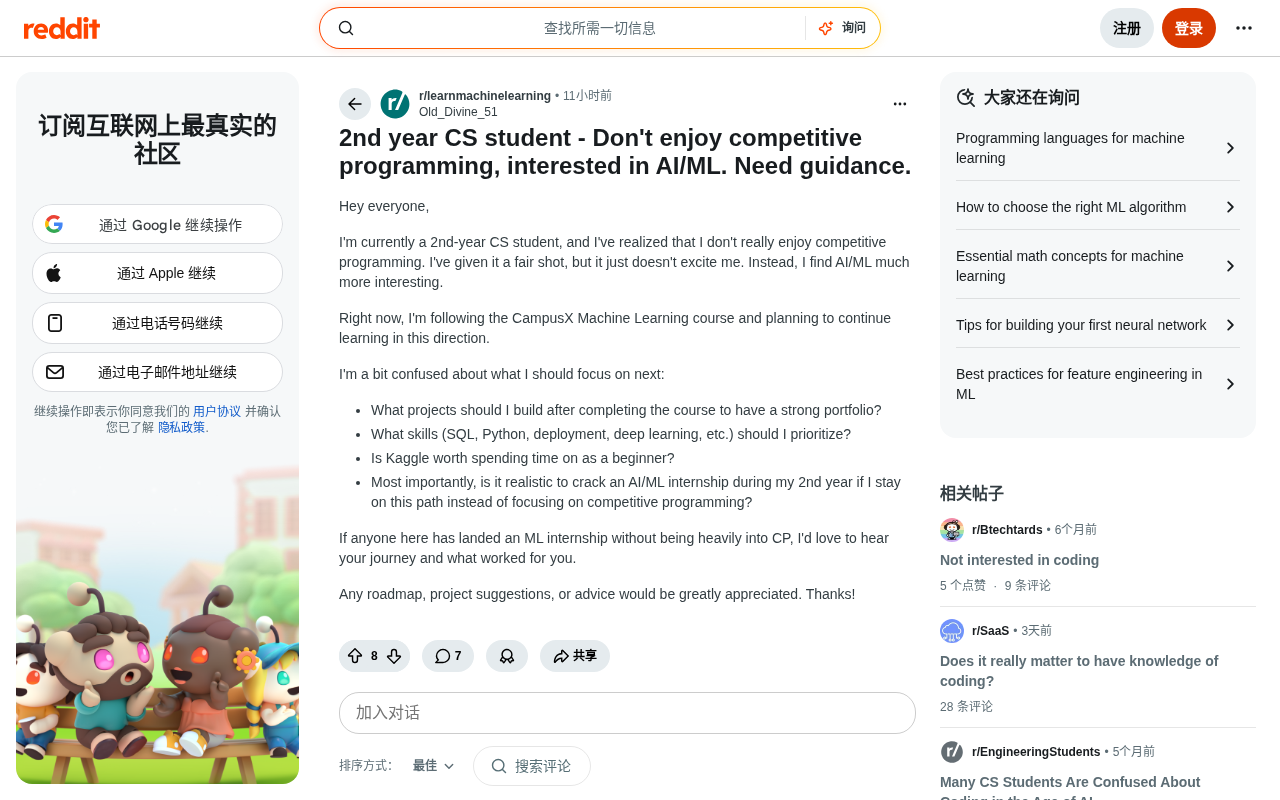
No Competitive Programming Required: How CS Students Can Pivot to AI/ML and Land Internships
How can CS students who dislike competitive programming systematically pivot to AI/ML? This guide covers skill priorities (Python/SQL/ML/deployment), portfolio strategy, Kaggle tips, and real paths to landing AI/ML internships.
Read more →

·3 min
OpenAI Codex in the Cloud: Exploring Codebases, Auto-Coding, and Generating PRs End-to-End
A deep dive into OpenAI Codex's cloud workflow: using a Next.js project to demo Ask/Code modes, auto-generating Pull Requests, and locally verifying merges for AI-assisted development.
Read more →

·2 min
SpringBoot in 1 Hour for Absolute Beginners: The Big-Picture Learning Method
Getting overwhelmed by SpringBoot's complexity? This guide shares a beginner-friendly learning method: evolve from simple Java projects to enterprise SpringBoot apps, understand the tech's history, and ship your first project fast.
Read more →

·7 min
21-Day Python Automation Testing Crash Course: A Complete Breakdown of the Three-Stage Learning Path
Learn automation testing from scratch! This article breaks down a three-stage path: Selenium/Appium tools, Requests+PyTest API testing, performance testing and CI/CD, with real projects—build a complete skill set in 21 days.
Read more →

·4 min
Getting Started with AI Agent Development: Core Mindset and Learning Path for Beginners
Intimidated by AI Agent development? This article breaks down the two biggest beginner pain points and reveals why the real skill isn't memorizing APIs, but mastering requirement decomposition, workflow design, and problem-solving.
Read more →

·5 min
Python Learning Roadmap for Beginners: A Three-Stage System to Avoid 90% of Detours
Learning Python from scratch? This article breaks down the three learning stages—Fundamentals, Intermediate, and Practice—covering variables, OOP, scraping, and data analysis to help you plan a systematic Python path.
Read more →

·4 min
Python Learning Path for Absolute Beginners: A Science-Based Guide to Avoid Common Pitfalls
How can beginners learn Python without getting lost? This guide outlines a 3-stage learning path covering basics, advanced topics, and hands-on practice in web scraping, data analysis, and office automation.
Read more →

·7 min
Learning Python Web Scraping from Scratch: How It Works, the Full Workflow, and Legal Boundaries
A must-read intro to Python web scraping: from HTTP requests and HTML parsing to data storage, systematically explaining how crawlers work and their full workflow, while clarifying legal boundaries like the robots protocol and privacy protection.
Read more →

·7 min
The Complete Guide to OpenCode: Installing, Configuring, and Using the Terminal AI Coding Assistant
An in-depth guide to installing, configuring, and extending OpenCode, the terminal AI coding assistant. Covers desktop and WSL installation, model config, MCP integration, and custom Agents.
Read more →
·7 min
Spring AI 2.0 in Practice: A Beginner's Guide for Java Developers Building AI Agents
A complete Spring AI 2.0 guide for Java developers covering unified API abstraction, RAG, tool calling, MCP protocol, and enterprise projects to build AI Agents.
Read more →

·3 min
Vibe Coding Guide: Building Web Apps with AI from Zero Experience
Vibe Coding lets non-programmers build web apps using natural language and AI agents. Learn Claude Code, model selection, cost control via cache optimization, and agentic engineering.
Read more →

·4 min
AI-Powered Chrome Extension Monetization: A No-Code Practical Guide
No coding skills? Learn how to build Chrome extensions for global markets using AI — from finding demand and generating code to publishing on the Chrome Store and earning subscription revenue.
Read more →

·7 min
App Builder: Generate Runnable Applications from a Single Sentence — A New Paradigm in AI Programming Tools
App Builder generates single-file runnable apps from natural language, with real-time sandbox preview and conversational revision. Deep analysis of its workflow, architecture, limitations, and costs.
Read more →

·4 min
AI Agent Memory System Architecture Breakdown: A Practical Selection Guide from 16 Open-Source Projects
Deep analysis of memory system architectures across 16 open-source AI Agent projects including Hermes, Goose, NanoClaw, and Deerflow, covering FTS5 vs vector search, multi-tenant isolation, and LLM auto-extraction.
Read more →

·3 min
A Complete Guide to Learning Python from Scratch: From Basics to Web Scraping Projects
A systematic Python learning path for beginners covering syntax, OOP, web scraping, office automation, and data analysis, with methodology tips and resources.
Read more →

·3 min
The Complete Guide to Building Dify Workflows: A Hands-On Guide to No-Code AI Applications
Complete guide to Dify's five app types, Docker deployment for v1.8.0, and workflow building. Compare Dify vs Coze and learn to build enterprise AI apps with no code.
Read more →

·3 min
Dify 1.8 Deployment & Configuration Guide: Comparison with Coze, RagFlow, and N8N
Complete guide to Dify 1.8 deployment changes, five application types explained, and a detailed comparison with Coze, RagFlow, and N8N for enterprise AI platform selection.
Read more →