#Agent
118 related articles

AI Agent Using DNS Tunneling to Access External Chatbots: A Security Blind Spot We've Been Ignoring
An AI Agent accessed an external chatbot via DNS protocol, exposing a critical blind spot in sandbox isolation. Learn how DNS tunneling works and how to defend against it.

The Limits of AI Research Automation: Agents Aren't Magic Wishing Wells
Which parts of research can actually be automated by AI? Based on a Bilibili creator's hands-on experience, this article breaks down the physical vs. digital divide in research, explains Human-in-the-Loop automation, and shows how Agents can unify thousands of PhD project files into a traceable, reproducible system.

Proactive AI Agents: Using Scheduled Triggers to Enable Autonomous Background Execution
Proactive Agents should run autonomously in the background. Scheduled triggers are the most practical first step. This article explores scheduling, event-driven triggers, and agent product design.

How to Validate AI Agent Behavior in Production: A Runtime Verification Guide
How do you validate AI Agent behavior in production when it executes irreversible actions? This guide covers guardrails, human-in-the-loop, runtime tracing, and LLM-as-a-judge for layered defense.

From LLM to Super Agent: A Complete Breakdown of Core Concepts in Large Model App Development
A complete guide to core LLM app development concepts: from LLM, Prompt, Context, and Memory, to RAG, Function Calling, and MCP, to Workflow, Skills, SubAgent, and Agent — plus why OpenClaw went viral.
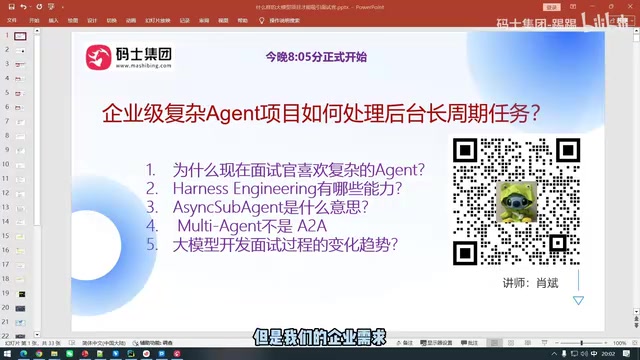
Enterprise-Grade Complex Agent Systems in Practice: Long-Running Tasks and Multi-Agent Management Explained
How do enterprise-grade agent projects handle long-running background tasks? This article breaks down complex vs. simple tasks, Multi-Agent architecture, and planning with strong reasoning models.

AI Agent Explained: Why It's the Next Computing Revolution After the GUI
Learn what AI Agents are: autonomous systems built on LLMs that plan and execute tasks. Discover why Bill Gates calls it the third computing revolution, and how Agent = LLM + Planning + Memory + Tools.

MiniCPM 2B Local Deployment & Agent Tool Calling Tutorial
Full tutorial on deploying MiniCPM-2B locally via LM Studio with only 4GB VRAM. Learn how to enable tool calling, connect to DeepSeek Hermes, and run document translation and web search tasks.

Ekko Studio + Jev: Reducing Agent Wait Time at the Decision Layer
Ekko Studio and Jev optimize AI Agent decision steps — tool selection, context compression, and summarization — to reduce idle wait time. A breakdown of their design, three use cases, and key engineering limits.

DeepSeek Harness Beginner's Guide: Understanding Agents and Harness
A beginner-friendly guide to DeepSeek Harness: clearly explains what Agents (LLM + Context + Tools) and Harness are, and explores DeepSeek Harness's plugin architecture, four modes, and Creation Mode.
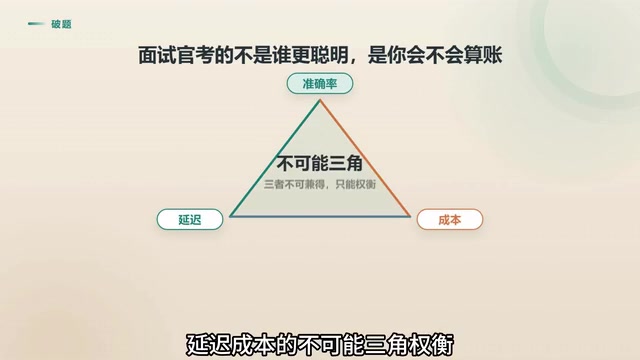
Agent Skill Routing: Retrieval vs. LLM vs. Two-Stage Architecture Compared
Retrieval or LLM for Agent skill routing? Compare coarse-filter vs. fine-select architectures on latency, accuracy, and cost — with 4 key production considerations.
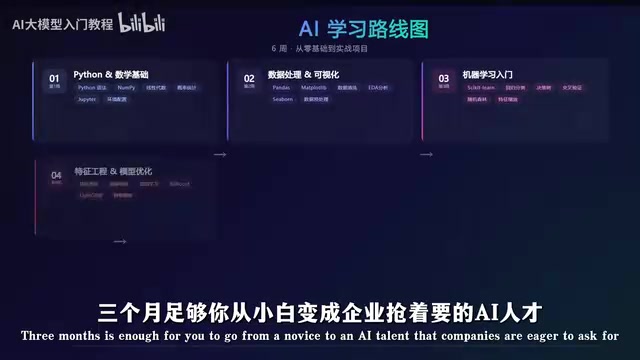
AI Large Model Learning Roadmap for Beginners: Three Stages from Prompt Engineering to Agent Development
A complete AI learning roadmap for beginners: from prompt engineering and API calls, to RAG knowledge bases, to Agent and multi-agent development — a 3-stage framework to go from zero to building real AI applications.
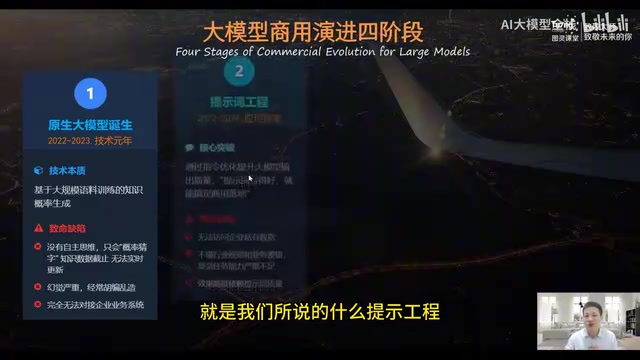
AI Agent in Practice: Understanding the Value and Real-World Applications of Intelligent Agents Through the Evolution of LLMs
From native LLMs to AI Agents: explore the four stages of LLM commercial deployment, the four core Agent capabilities, and a three-project hands-on roadmap for beginners.
Eval-Driven Development: How to Scientifically Test Your AI Skills and Agents
Google engineer JF shares Eval-driven development in practice: using LLMs as judges, writing reliable scoring rubrics to test non-deterministic AI skills and Agents, and using Evals for model selection.

TrueForge: Open-Source Universal Agent Runtime — A Low-Cost Alternative to Claude Managed Agents
TrueForge is an open-source MIT-licensed Agent runtime by TrueFoundry, offering up to 75% cost savings over Claude managed agents while maintaining accuracy. Supports any model, MCP, code sandboxes, and local models.
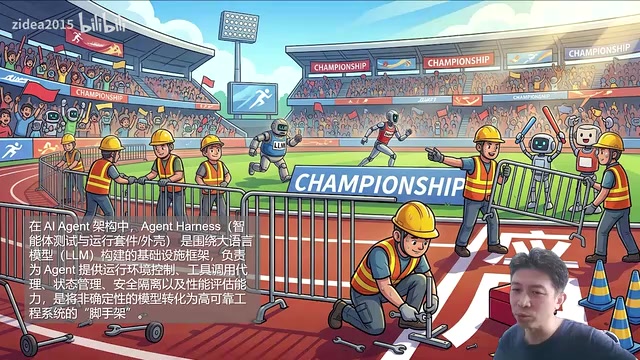
What Is a Harness? Understanding the Core Scaffolding Framework for Agent Deployment
Harness is the core scaffolding framework for Agent deployment, transforming non-deterministic LLMs into reliable engineering systems. Learn its design elements and four core functions.

When AI Agents Go to Production, What Breaks First?
What breaks first when an AI Agent hits production? This article analyzes key failure points: tool calls, error handling, context drift, cost spirals, and observability gaps.
 Tutorials
Agent Tuning: A Complete Guide to Training LLMs with Agent Capabilities
A deep dive into Agent Tuning principles and practices, covering why Agent training is needed, the evolution from Prompt to RAG to Agent, development workflows, and cost assessment for private deployment.
 Tutorials
From Traditional RAG to Agentic RAG: Core Principles and Implementation Guide
Deep dive into the technical differences between traditional RAG and Agentic RAG, covering offline/online pipeline principles, tool-based autonomous decision mechanisms, and a LangGraph-based Agentic RAG implementation via the ChatBox open-source project.
 Tutorials
Fully Automated Invoice Reimbursement with Local AI Agent: From Process Breakdown to Deployment
How to build a fully automated invoice reimbursement system with local AI Agents, covering OCR, info extraction, and form generation with MinerU+Qwen3+Qianwen Po.