#Agentic coding assistant
369 related articles
·2 min
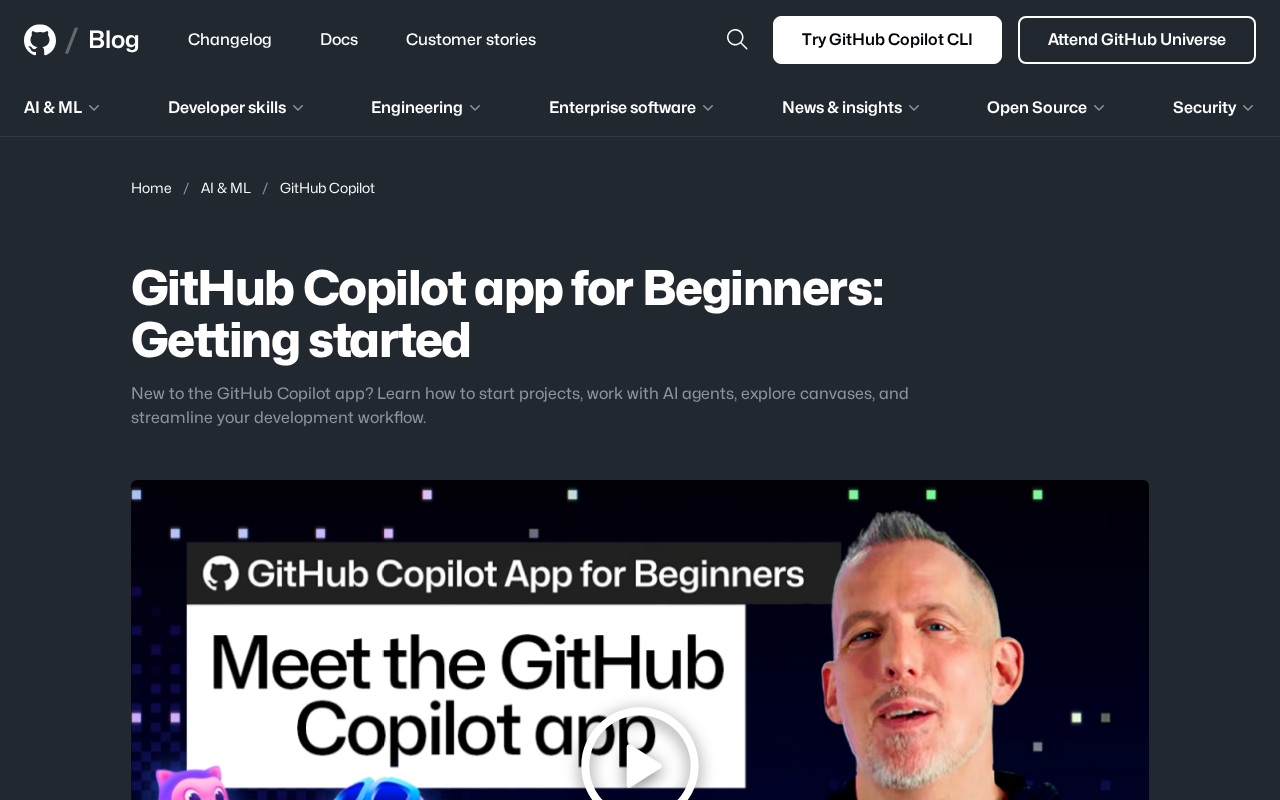
Getting Started with GitHub Copilot App: A Beginner's Guide to AI-Assisted Development
A detailed guide to GitHub Copilot's standalone app covering project creation, AI agent collaboration, canvas features, and tips to help developers get started with AI-assisted development.
Read more →

·4 min
AI Coding Tools in Practice: Which Ones Actually Stuck with the Team?
A 12-person product team shares real-world experiences with Cursor, Codex, Claude Code, and CodeRabbit—exploring efficiency plateaus, scenario matching, and selection criteria for AI coding tools that actually stick.
Read more →

·4 min
Claude Code from Scratch: A Complete Guide from Installation to Enterprise-Grade Development
A complete guide to Claude Code from beginner to enterprise practice: covering CLI installation, connecting domestic LLMs via CC Switch, basic commands, Git workflow integration, automated bug fixing, and engineering capabilities like MCP and SubAgents.
Read more →

·1 min
Grok 4.5 Free on Cursor: Performance, Cost, and How to Use It
xAI's Grok 4.5 has landed in the Cursor editor, free on all plans. This article covers how to enable it, benchmark performance, token cost comparisons, and practical strategies for pairing it with your main model.
Read more →

·1 min
Grok 4.5 Free in Cursor: Performance, Cost, and Usage Guide
xAI's Grok 4.5 has landed in the Cursor editor, free on all plans. This guide covers how to enable it, benchmark performance, token cost comparisons, and practical mix-and-match strategies to maximize this free window.
Read more →

·3 min
Got Codex but Don't Know What to Build? Use 'Friction Point Thinking' to Find Real Needs
Installed Codex or Claude Code but don't know what to build? This hands-on browser extension case reveals the core methodology of the AI coding era: start from your own and others' 'friction points' to find worthwhile projects.
Read more →

·3 min
Installed Codex But Don't Know What to Build? Find Real Needs with the "Friction Point" Mindset
Installed Codex or Claude Code but don't know what to build? This real-world browser extension case reveals the core methodology of the AI coding era: start from your own and others' "friction points" to find projects worth doing.
Read more →
ChatGPT Work Deep Dive: The Cloud-Loca…
·3 min
ChatGPT Work Deep Dive: The Cloud-Local Split and What It Means for Users
ChatGPT Work runs in the cloud on web/mobile but accesses local files on desktop — and they don't sync. A deep dive into the split design, UX tradeoffs, and broader AI agent challenges.
Read more →

·2 min
GPT-5.6 Three-Model Showdown: Sol vs Terra vs Luna — Which One Should You Pick?
OpenAI GPT-5.6 launches Sol, Terra, and Luna simultaneously. We compare benchmarks and real-world coding tests to help you choose the right model for your needs.
Read more →

·3 min
Codex Beginner's Guide: A Step-by-Step AI Work Assistant Tutorial for Non-Coders
Complete beginner's guide to OpenAI Codex desktop client: installation, setup, project management, and plugins — no coding required. Let AI actually do work for you.
Read more →

·2 min
Getting Started with ChatGPT Codex: Key Differences Between an AI Coding Agent and ChatGPT
Codex is OpenAI's AI coding agent that autonomously reads code, fixes bugs, and runs tests — far beyond ChatGPT's code generation. Learn the key differences.
Read more →

·4 min
Vibe Coding vs. AI-Assisted Engineering: An In-Depth Look at Enterprise-Level Development
Can AI coding tools let non-developers replace programmers? This deep dive examines Vibe Coding's real limits, compares Claude Code vs. Codex, and reveals the methodology behind enterprise-grade AI-assisted software engineering.
Read more →

·2 min
Claude Sonnet 5 Leaked: Near-Opus Performance at a Fraction of the Price
Claude Sonnet 5 leak: rumored input price of just $2/million tokens with near-Opus 4.8 performance. We break down the evidence, pricing, and what it means for developers.
Read more →

·6 min
The Evolution of Claude Code: From Manual Review to 65% Fully-Automated PRs
Anthropic engineers reveal Claude Code's 18-month evolution: system prompt cut by 80%, 65% of PRs shipped automatically by AI, Claude Tag collaboration, and the safety logic behind auto mode.
Read more →

·5 min
The Complete Claude Code Guide: Installation, Core Features, and Advanced Workflows
An in-depth guide to Anthropic's Claude Code agentic coding tool, covering installation, pricing plans, model selection, token management, CLAUDE.md global memory, MCP integration, Subagents, and more.
Read more →

·3 min
Opal: A Designer Built an AI Pet Assistant on Raspberry Pi Using OpenClaw
Microsoft designer Tua Nguyen built Opal, an AI rabbit assistant on Raspberry Pi using OpenClaw — capable of browsing the web, finding recipes, and operating GitHub.
Read more →

·3 min
Claude Code Practical Guide: Environment Setup, Git Workflows, and Engineering in Production
A complete guide to Claude Code: environment setup, switching to domestic LLMs, CLI commands, Git workflows, MCP, Subagents, and enterprise project walkthroughs.
Read more →

·2 min
OpenAI Codex Parallel Tasks in Practice: How to Run Multiple AI Coding Tasks Simultaneously
How OpenAI Codex Cloud runs multiple tasks in parallel using isolated containers, async workflows, and PR review. A practical guide to agentic coding efficiency.
Read more →

·2 min
Vibe Coding in Practice: From Idea to Real Product — No Coding Required
Vibe Coding is an AI-driven development paradigm that requires no coding skills. Use natural language to guide AI through design, development, and testing. Learn the 4-step workflow using Gemini, Figma Make, and Claude Code.
Read more →

·3 min
OWASP Agentic Security Top 10 Deep Dive: Understanding ASI01–ASI10 Risks and Mitigations
A comprehensive breakdown of the OWASP Agentic Security Top 10 framework, covering ASI01–ASI10 risks including goal hijacking, tool misuse, identity abuse, supply chain vulnerabilities, and cascading failures — with practical mitigations for AI agent systems.
Read more →