#Google Stitch
108 related articles

·2 min
GPT-5.6 in Practice: Full Restructure of a Real Small Product with Terra + Soul
Using GPT-5.6's Terra and Soul versions to fully restructure a real live product. Deep comparison of capabilities and cost-effectiveness, with practical tips on task-based model switching.
Read more →

·2 min
GPT-5.6 Deep Dive: Tiered Models + Multi-Agent Architecture, LLMs Evolve into Workflow Engines
GPT-5.6 isn't just a capability upgrade — it's an architectural shift: tiered models, programmatic tool calling, and multi-agent collaboration turn LLMs into workflow engines for production systems.
Read more →

·3 min
Getting Started with LangChain 1.3: Building Intelligent Agent Applications with Deep Agent
Learn LangChain 1.3 core concepts including LLM model abstraction, RAG retrieval-augmented generation, and Agent orchestration. Build a Deep Agent with planners, tools, and reflection modules.
Read more →

·3 min
AI Video Generator Mobile Experience Ranked: Testing 8 Tools on Android and iOS
Hands-on mobile testing of 8 AI video generators across Android and iOS. Higgsfield, Runway, and Imagine Art lead; VO 3.1 and Pika fall short. Find the best tool for mobile video creation.
Read more →

·2 min
Vibe Coding: The Full-Stack AI Development Methodology for the Solo Founder Era
Vibe Coding is reshaping software development — use natural language to direct AI through code, design, testing, and marketing. A guide for solo founders and indie developers.
Read more →

·3 min
Gemini Omni Flash Complete Guide: Google's Multimodal Video Editing Model
Google Gemini Omni Flash is now open via API, supporting multi-turn video editing with text and reference images, audio-video sync, and character consistency. Learn about its capabilities, API usage, pricing, and best practices.
Read more →

·3 min
Meta Muse Spark 1.1 Deep Dive: The Platform Ambitions Behind Meta's First Closed-Source Model
Meta Muse Spark 1.1 deep dive: native multimodal architecture, platform tools, social data retrieval, e-commerce vision — Meta's first closed-source API model benchmarks against Anthropic Sonnet.
Read more →

·3 min
Can GPT-5.6 Prove a 50-Year Graph Theory Conjecture? The Boundaries and Verification of AI Mathematical Reasoning
GPT-5.6 Soul Ultra claims to prove the 50-year-old Cycle Double Cover Conjecture in under an hour using 64 parallel agents. We examine the technical path, missing peer review, and formal verification gaps.
Read more →

·4 min
Hands-On with GPT-5.6: A Single Prompt Builds a Real-Time Voice Anime App
Hands-on with GPT-5.6 Sol: auto-generate real-time voice anime characters from one prompt, write physics engines from scratch, and build unfamiliar toolchains autonomously. In-depth review of coding, agentic tasks, benchmarks, and its hallucination weakness.
Read more →
·3 min
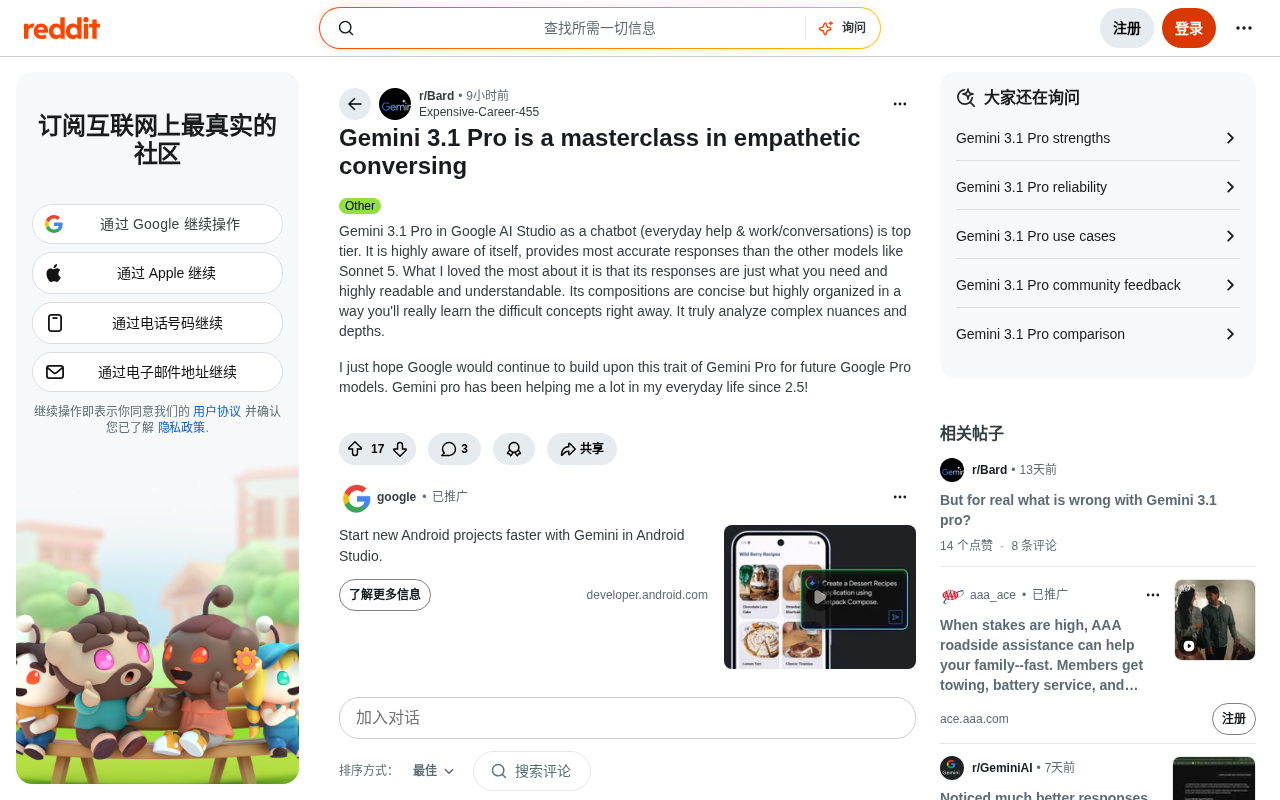
Gemini 3.1 Pro Review: Why Its Empathetic Conversation Style Keeps Users Coming Back
A longtime user calls Gemini 3.1 Pro "a masterclass in empathetic conversing" — concise, context-aware, and intent-driven. We break down why empathy is becoming AI's new competitive frontier.
Read more →

·7 min
Breaking Down the Core Skills of an AI Application Engineer: From Beginner to Industrial-Grade Deployment
Knowing how to call an API doesn't make you an AI engineer. This article breaks down the complete skill structure of an AI application engineer, covering Python fundamentals, LLM fine-tuning, Agent development, and enterprise projects.
Read more →
Anti-AI Fonts: Adversarial Typography …
·3 min
Anti-AI Fonts: Adversarial Typography That Humans Can Read but Machines Can't
Anti-AI fonts use adversarial glyph design to exploit the perceptual gap between human and machine vision, blocking OCR and LLM scraping. A deep dive into the tech, limits, and data sovereignty implications.
Read more →

·3 min
AI Agent Builder: A Complete Hands-On Guide from Zero to Enterprise-Grade Delivery
AI Agents are becoming the core form for deploying large models. This article explores the AI Agent Builder profession, revealing the SME deployment gap and a complete path from fundamentals to delivery.
Read more →

·6 min
The Eight-Step Method for Agent Development: A Practical Path from Pitfalls to Production
Many enterprises fail at AI Agents due to choosing the wrong tools and lacking methodology. This article outlines an eight-step Agent development method—from cognitive foundations, scenario selection, hand-writing ReAct, and structured output to Tool Use, RAG, evaluation sets, and production fallback.
Read more →

·5 min
GPT-5.6 Launches: Comprehensive Upgrades to ChatGPT Work, Sites, and Desktop Client
OpenAI releases the GPT-5.6 model family, launching enterprise-focused ChatGPT Work, one-click ChatGPT Sites, and a major desktop client upgrade, with coding now ahead of rivals. Meta, Google, and Kimi follow intensively.
Read more →

·3 min
Sidenote: Annotate Rendered Pages Directly, Let LLM Auto-Generate Git Commits
Sidenote is an open-source tool that lets you annotate rendered static blog pages in natural language, with an LLM auto-locating source files and generating Git diffs.
Read more →

·4 min
The Death of Codex: How OpenAI Buried Developers' Favorite Coding Brand With Its Own Hands
OpenAI merged Codex into ChatGPT, killing a developer-beloved AI coding brand. A deep dive into the gains and losses of this brand consolidation.
Read more →

·6 min
DeepSeek Builds Its Own AI Chips: The Strategic Logic and Challenges Behind Compute Independence
DeepSeek is entering AI chip development, targeting compute autonomy. This article analyzes its motivations, software-hardware synergy, chip R&D challenges, and impact on China's AI vertical integration.
Read more →

·6 min
Grok 4.5 Coding Benchmark: A Deep Dive into Performance, Speed, and Cost
xAI releases Grok 4.5, purpose-built for coding agents. 80 TPS speed, $2/M input tokens, SWE Bench Pro score of 64.7, and 4.2x better token efficiency than Opus 4.8. A deep hands-on review.
Read more →

·3 min
GitHub Daily · July 12: The Explosion of the Agent Skills Ecosystem and the Rust Rewrite Wave
July 12 GitHub trending: Agent Skills/MCP ecosystem explodes with superpowers hitting ~900 stars, pgrust rewrites Postgres in Rust passing 100% tests, plus solid engineering foundations.
Read more →