#Multi-Agent
1330 related articles
 Product Reviews
·4 min
Comparing the Top 4 AI Coding Tools: Copilot vs. Cursor vs. TRAE vs. Claude Code — Which One Should You Choose?
In-depth comparison of 2025's top 4 AI coding tools: GitHub Copilot, Cursor 2.0, TRAE Solo, and Claude Code — covering features, experience, and pricing to help developers choose.
Read more →
 Product Reviews
·3 min
Rovo Agent: 20 Million Free Tokens Daily, #1 on SWE-bench AI Coding CLI Tool
Rovo Agent is Atlassian's AI coding CLI tool offering 20M free Claude 4 Sonnet tokens daily, ranked #1 on SWE-bench. Learn about its adaptive memory system, installation, and hands-on experience.
Read more →
 Product Reviews
·3 min
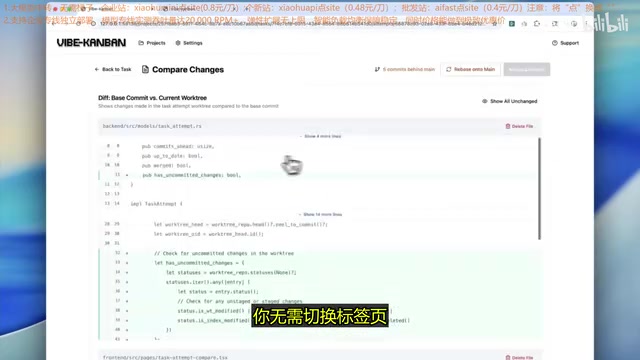
Vibe-Kanban: An Open-Source Platform for Unified Orchestration of AI Coding Agents Like Claude Code and Gemini CLI
Vibe-Kanban is an open-source AI coding agent orchestration platform supporting parallel task processing with Claude Code, Gemini CLI, and AMP via kanban tracking and centralized MCP configuration.
Read more →
 Product Reviews
·3 min
Vibe Board: An Open-Source Orchestration Platform for Managing Multiple AI Coding Agents
Vibe Board (VibeCombat) is an open-source AI coding agent management platform supporting parallel orchestration of Claude Code, Gemini CLI, AMP, and more with unified MCP config and real-time task tracking.
Read more →
 Tutorials
·4 min
2025 LLM Career Transition Roadmap: A Three-Phase Plan from Foundations → Frameworks → Real-World Projects
A systematic 2025 LLM career transition roadmap covering Python, Transformers, LangChain, LlamaIndex, RAG, Agent development, and fine-tuning across three phases achievable in 2-3 months.
Read more →
 Product Reviews
·4 min
Complete Guide to iFlow CLI: A Free AI Coding Terminal Tool Put to the Test
A detailed guide to iFlow CLI, a free AI coding terminal tool covering installation, four working modes, Subagent, MCP features, and cost-saving strategies with Claude Code/Cursor to cut AI coding expenses by 50%+.
Read more →
 Tutorials
·3 min
Implementing LangGraph in TypeScript: Deconstructing the Core Principles of AI Agent Frameworks from Scratch
Learn how to implement LangGraph's core design from scratch in TypeScript, covering state-graph-driven architecture, node-based orchestration, and the ReAct pattern for AI Agent development.
Read more →
 Expert Opinions
·3 min
From WeChat Codex to AI Agent Best Practices: A Developer's Pivot
After completing core WeChat-Codex integration, the Codex Bridge author validated three directions and pivoted to AI Agent best practices—sharing product thinking and methodology insights.
Read more →
 Tutorials
·4 min
Vibe Coding Practical Guide: SDD (Specification-Driven Development) Reshaping Full-Stack Programming Workflows
In-depth analysis of SDD (Specification-Driven Development), the core methodology of Vibe Coding in 2025, covering the full workflow from requirements to deployment with tools like Claude Code.
Read more →
 Product Reviews
·4 min
Kimi K2 Thinking Hands-On Review: Can It Replace Sonnet 4.5 in Claude Code?
Hands-on testing Kimi K2 Thinking in Claude Code across text creation, programming, agent building, and full-stack apps. Comparing it to Claude Sonnet 4.5 and DeepSeek as a cost-effective AI coding alternative.
Read more →
 Product Reviews
·3 min
Claude Code 2.0 Review: Rewind Rollback, Usage Monitoring, and Other Practical New Features
In-depth review of Claude Code 2.0's three core features: Usage monitoring, Rewind code rollback, and Ctrl+R prompt search, plus Sonnet 4.5 model and VS Code extension insights.
Read more →
 Tech Frontiers
·2 min
Claude Code Web Launch: Parallel Programming and Haiku 4.5 Multi-Model Collaboration in Practice
Anthropic launches Claude Code Web with browser and mobile coding, plus Haiku 4.5 at 1/3 the cost of flagship models. Parallel tasks, multi-model collaboration, and seamless cloud-to-local workflows.
Read more →
 Product Reviews
·3 min
Claude Haiku 4.5 Review: Sonnet 4-Level Coding at 1% of the Cost
In-depth review of Claude Haiku 4.5: 73.3% on SWE-bench rivaling Sonnet 4, input at just $1/million tokens. Covers code generation, agentic coding, SVG tests, and Sonnet+Haiku collaboration strategies.
Read more →
 Product Reviews
·3 min
Claude Haiku 4.5 In-Depth Review: Twice the Speed, But Can It Replace Sonnet?
Independent developer benchmarks Claude Haiku 4.5 vs Sonnet in agentic coding using a multi-agent monitoring system, revealing speed gains, precision gaps, and the optimal model hierarchy strategy.
Read more →
 Product Reviews
·2 min
Claude Haiku 4.5 In-Depth Review: One-Third the Cost, Coding Performance Rivaling Sonnet 4
Anthropic releases Claude Haiku 4.5: coding rivaling Sonnet 4 at 1/3 the cost and 2x speed. A dev built browser-based macOS for just 28 cents, redefining small AI model capabilities.
Read more →
 Tech Frontiers
·2 min
Claude Haiku 4.5 Deep Dive: The Cost-Performance Champion with 2x Speed and 66% Lower Cost
Deep dive into Anthropic's Claude Haiku 4.5: a lightweight AI model with nearly 2x speed, 66% lower cost, and multi-agent support—ideal for developers seeking performance at scale.
Read more →
 Tutorials
·3 min
51.8K Stars! Claude Code Best Practices: A Complete Guide from Getting Started to Agent Engineering
Deep dive into the 51.8K Star Claude Code best practices project on GitHub, covering Prompt Engineering, efficient Web Coding, multi-Agent collaboration, and more.
Read more →
 Tutorials
·4 min
Vibe Coding Practical Guide: SDD Methodology Explained with 4 Enterprise-Level AI Programming Projects
Deep dive into SDD specification-driven development methodology with 4 enterprise-level Vibe Coding projects including Chat BI and multimodal knowledge bases, covering Cursor, Claude Code, and Prompt Engineering.
Read more →
 Tutorials
·3 min
Building an AI Workstation: A Layered Tool Strategy and Physical Isolation Guide
A practical guide to building an AI workstation: physical isolation with vertical screens, pyramid tool layering (Doubao/Trae/Claude/GPT-4), and real Token cost breakdowns to maximize AI workflow efficiency on a budget.
Read more →
 Expert Opinions
·4 min
Is CI/CD Dead? The Continuous Computation Architecture Revolution in the AI Agent Era
Traditional CI/CD pipelines are being shattered by AI Agents. This article analyzes the shift from PR-driven to intent-driven architecture, exploring Pre-Merge queues, stateful environments, and multiverse development as new continuous computation paradigms.
Read more →