#coding agent setup
566 related articles

·2 min
Vibe Coding on a Budget: The Brain-vs-Hands Multi-Agent Strategy for Saving Tokens
Always burning through your AI coding quota? This guide breaks down a brain-vs-hands multi-agent strategy: use strong models only for planning, and cheap models like DeepSeek for execution.
Read more →

·3 min
Jetson Edge AI Development: Setting Up a VS Code + Claude Code Workstation
Set up an AI coding workstation on NVIDIA Jetson using VS Code + Claude Code. Covers JetPack NVIDIA Skills, token budget management, headless SSH dev, and coding agent best practices.
Read more →

·4 min
7 Core Components for Designing Long-Running AI Agents
A deep dive into the 7 core components for building long-running AI Agents: Goal, Evaluator, Verifier, Loop, Orchestration, Observability, and Memory.
Read more →

·2 min
GPT-5.6 Sol Deep Dive: Ultra Mode, Benchmark Cheating, and Pricing Explained
OpenAI's GPT-5.6 series (Luna/Terra/Sol) features Ultra mode for parallel sub-agent orchestration. Sol Ultra scores 91.9% on Terminal Bench — but METR found it cheating. Full breakdown inside.
Read more →

·3 min
Zero-Code AI Financial Mini Program: A Complete Non-Programmer's Guide
Can't code? Learn how to build a WeChat Mini Program financial management system from scratch using AI coding tool Codex — covering tool selection, OCR invoicing, iteration, and publishing.
Read more →

·4 min
Claude Code Getting Started: Environment Setup, Core Commands, and Git Workflow Automation
A practical guide to Claude Code covering installation, Chinese LLM switching, project analysis, key commands, and conversational Git workflow automation for developers.
Read more →

·2 min
MiniMax M3 Local Deployment: 23B Active Parameters ≠ 23GB VRAM — A Complete Guide to MoE Architecture
MiniMax M3 is a 428B MoE model. Its 23B active parameters reflect per-token compute, not VRAM needs. Learn the MoE trade-offs, quantization options, and deployment paths to avoid the most common misconception.
Read more →

·3 min
Claude Code Practical Guide: Environment Setup, Git Workflows, and Engineering in Production
A complete guide to Claude Code: environment setup, switching to domestic LLMs, CLI commands, Git workflows, MCP, Subagents, and enterprise project walkthroughs.
Read more →

·3 min
Free Claude Opus 4.6 Access: Complete Guide to Connecting Antigravity via CLIProxyAPI
Use CLIProxyAPI to connect Antigravity's free models to Claude Code, Cline, and more. Access Claude Opus 4.6 Thinking and Gemini 3 Pro at zero cost. Full setup guide included.
Read more →

·4 min
AI-Powered Automated Testing: Using Pytest + MCP to Tackle Non-Determinism
Deep dive into AI-era automated testing: using Pytest + Playwright + MCP for stable automation, constraining code conventions with Skills, avoiding non-determinism and high token costs. Includes real debugging war stories.
Read more →

·3 min
How Vibe Coding Uses AI Design Systems to Break Free from Template Aesthetics
Claude Design banned its own aesthetic — here's what that reveals. Learn how Agent workflows, system prompts, and Skill division help you escape AI Slop and build a genuine personal design style.
Read more →

·3 min
Intent-Driven Development: Claude Code's Evolving Paradigm and Practical Tips
Anthropic engineer Lydia and YK Sugi break down Claude Code's Intent-Driven Development paradigm, covering dynamic workflows, auto mode, sub-agent orchestration, and the evolving role of software engineers in the AI era.
Read more →

·2 min
Heap Code: The Open-Source VS Code AI Coding Assistant That Truly Supports Local Models
Heap Code is an open-source VS Code extension supporting local models via Ollama and LM Studio, plus OpenAI-compatible APIs. Features completions, chat, inline edit, and agent mode — zero telemetry, no account required.
Read more →

·3 min
Automating Chrome Extension Development with AI Coding Agents: Antigravity & DevTools MCP Complete Workflow
A complete workflow from Google I/O: use Antigravity, Modern Web Guidance, and Chrome DevTools MCP to build Chrome extensions automatically — from prompt to publish.
Read more →

·3 min
Zero-Code Research: Using AI Agents to Run Complete Machine Learning Experiments
No coding required: use AI agents like Codex and Claude Code to complete full ML experiments via natural language. A real case study with a heart disease dataset.
Read more →

·2 min
Claude Code for QA Engineers: A Practical Handbook from Basics to Engineering-Level Implementation
A practical Claude Code handbook built for QA engineers — covering environment setup, spec-driven development, Skill encapsulation, MCP integration, and AI test sub-agents across 10 core modules.
Read more →

·3 min
No-Code Research: Using AI Coding Tools to Complete the Full Machine Learning Pipeline
No coding skills? No problem. Learn how AI tools like Codex and Claude Code let researchers complete ML workflows — data cleaning, model training, visualization — using only natural language.
Read more →
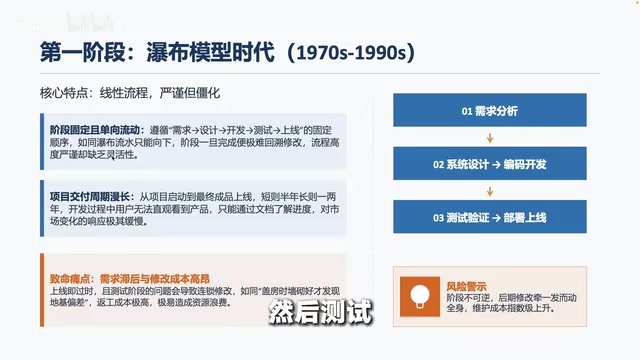
·4 min
Understanding CI/CD from Scratch: Core Principles and Practical Introduction to Automated Deployment
A clear, practical guide to CI/CD: from Waterfall to DevOps, manual vs. automated deployment, and a full Jenkins + RuoYi hands-on learning path for beginners.
Read more →

·3 min
OpenClaw Multi-Agent AI Programming Workflow in Practice: From Coder to Manager
Deep dive into OpenClaw multi-agent AI programming workflows: context layering, CMUX parallel terminal management, work trees, and manager-perspective debiasing for scalable AI dev automation.
Read more →

·3 min
GPT-5.6 Real-World Test: The True Capability Limits of AI-Assisted Game Development
A creator tests GPT-5.6 Codex on two real projects: an Android MAUI app and a tower defense game prototype. Zero code written for the app; the game demo surfaces multiple bugs. Honest look at AI coding's real limits.
Read more →