#context summarization
405 related articles
 Deep Dives
·4 min
Agent Loop Core Mechanism Explained: Building a ReAct Loop from Scratch (With Debugging War Stories)
Deep dive into Agent Loop, the core mechanism of AI Agents, based on ReAct architecture. Covers Tool Call ID handling, context management, assistant message feedback, with full Python code and common bug fixes.
Read more →
 Research
·2 min
MemGAS: Multi-Granularity Memory Association for Precise AI Agent Recall
ICLR 2026 paper MemGAS proposes multi-granularity memory association with adaptive selection, using GMM, entropy routing, and Personalized PageRank to enable precise recall in conversational agents.
Read more →
 Expert Opinions
·2 min
Anthropic Warns: AI Makes Startup Failure Rates Higher, Not Lower
Anthropic's Founders Playbook warns that AI lowers dev costs but not demand validation costs. When execution is cheap, judgment becomes the scarcest startup skill.
Read more →
 Tutorials
·1 min
Guide to Token Freedom: 5 Money-Saving Strategies for Using Codex and GPT at Low Cost
A detailed guide to achieving Token freedom with 5 strategies: model selection, relay APIs, Prompt optimization, free tier usage, and more to slash GPT and Codex API costs.
Read more →
 Tutorials
·1 min
LangGraph 1.0.5 Tutorial: Master AI Agent Orchestration & Multi-Agent Systems in Six Lessons
Complete guide to LangGraph 1.0.5 tutorial series covering durable execution, memory management, Human in the Loop, streaming, time travel, and multi-agent collaboration.
Read more →
 Tech Frontiers
·3 min
Google Jules 1.5 Upgrade: Free Task Quota Increased 12x, Development Experience Completely Revamped
Google Jules 1.5 gets a major upgrade with daily free tasks jumping from 5 to 60, plus new copy/download buttons, context preservation, and significant performance improvements.
Read more →
 Product Reviews
·3 min
Grok 4.1 vs GPT-5 vs Claude 4.5 Real-World Comparison | 2025 Model Selection Guide
2025 deep comparison of Grok 4.1, GPT-5, Claude 4.5, and Gemini 3 Pro across reasoning, coding, writing, and long-text tasks, with multi-model workflow examples and a selection guide.
Read more →
 Product Reviews
·3 min
The Complete Guide to Mistral Wire: Free Open-Source Terminal AI Coding Assistant & Best Claude Code Alternative
Deep dive into Mistral Wire—a free open-source terminal AI coding assistant. Detailed comparison with Claude Code, covering sub-agents, parallel tasks, slash commands, installation guide & demos.
Read more →
 Tutorials
·3 min
AI Agent Context Management in Practice: A Complete Guide from Death Loops to Intelligent Truncation
Deep dive into AI Agent context management: a three-step strategy from naive truncation to intelligent memory, covering sub-Agent architecture and long session evals to solve LLM context bloat.
Read more →
 Tech Frontiers
·4 min
Step 3.5 Flash Deep Dive: How a 196B Parameter Open-Source Model Beat Gemini
Deep dive into StepFun's Step 3.5 Flash: 196B parameter MoE model activating only 11B, 350 tokens/sec coding speed, 256K context window, local deployment ready. How it beats Gemini 3 Flash.
Read more →
 Product Reviews
·5 min
Manus vs Google Deep Research vs Flowith: A Hands-On Comparison of AI Agents for Courseware Generation
Hands-on comparison of Manus, Google Deep Research, and Flowith generating Kafka courseware with the same prompt. Detailed scoring reveals which AI agent delivers the best results.
Read more →
 Product Reviews
·3 min
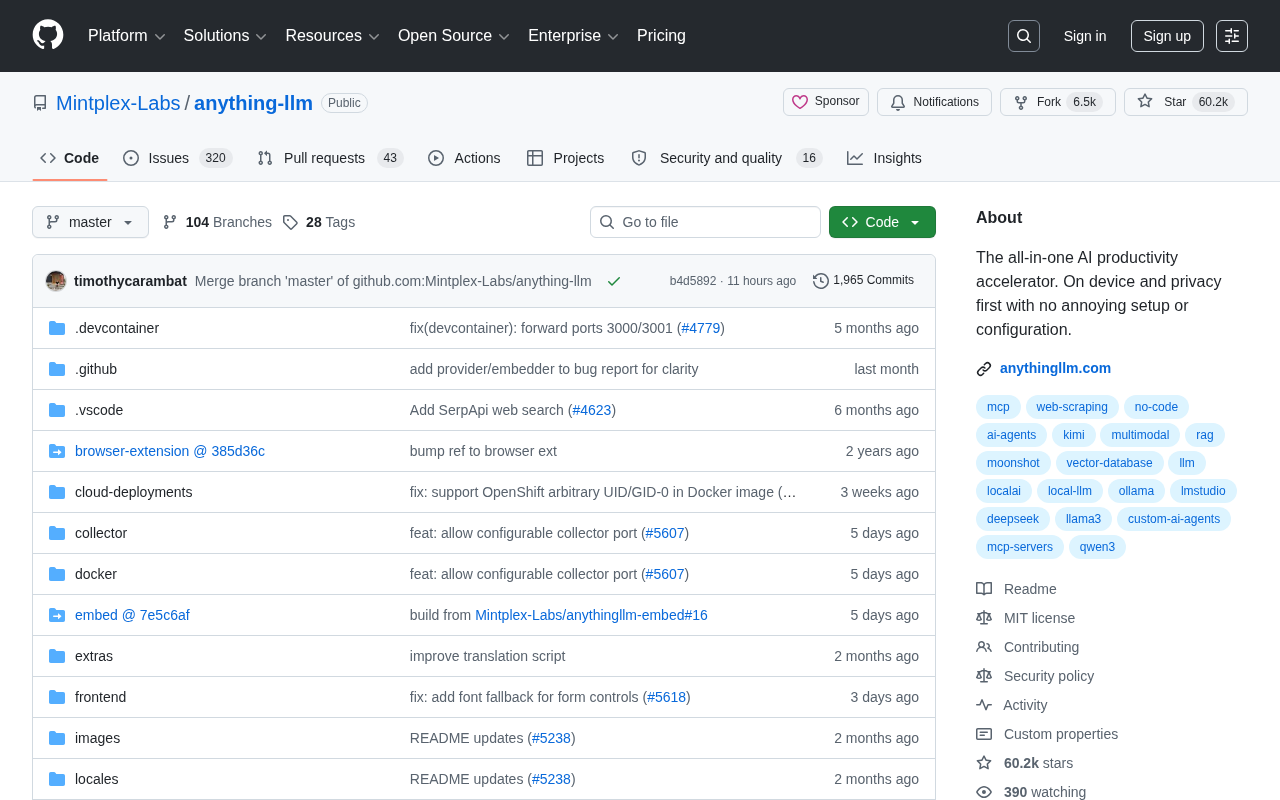
AnythingLLM: A Deep Dive into the All-in-One Local AI Knowledge Base Tool
Deep dive into AnythingLLM, a privacy-first, zero-config local AI productivity platform. Supports RAG document chat, multi-model integration, knowledge bases, and AI Agents with nearly 60K GitHub stars.
Read more →
 Deep Dives
·5 min
Hugging Face Transformers: A Comprehensive Guide to the 160K-Star Open-Source AI Framework
Comprehensive guide to Hugging Face Transformers, the 160K-star GitHub framework—covering architecture, multimodal support, quantization, and inference optimization for loading, fine-tuning, and deploying pre-trained models.
Read more →
 Deep Dives
·4 min
The Agentic AI Explosion: A Complete Guide to the Paradigm Shift from Generative to Agentic AI in 2026
In 2026, the AI industry shifts from generative to Agentic AI. Deep dive into GPT-5.5 agent capabilities, Claude's autonomous learning, Physical AI deployment, DeepSeek V4, inference optimization, and the global AI competition landscape.
Read more →
 Product Reviews
·3 min
MeMo Open-Source AI Agent Platform In-Depth Review: Long-Term Memory + MCP Protocol + Multi-Bot Collaboration in Practice
In-depth review of MeMo, an open-source AI Agent platform. Covers long-term memory, MCP protocol, multi-Bot container isolation, omni-channel deployment, with setup tutorials and usage tips.
Read more →
 Tutorials
·3 min
NVIDIA Free DeepSeek V4 Pro Tutorial: API Key Setup & Programming Tool Integration
Step-by-step guide to accessing DeepSeek V4 Pro and V4 Flash for free via NVIDIA NIM, with API key setup, model comparison, and integration for Cursor, Kline, and other coding tools.
Read more →
 Product Reviews
·3 min
VS Code AI Toolkit 2.0 Deep Dive: Agent Builder + Free Access to GPT-5
Deep dive into VS Code AI Toolkit 2.0 major update, covering Agent Builder, MCP tool integration, batch testing, model evaluation, and a complete guide to using GPT-5 and Claude for free via GitHub Models.
Read more →
 Deep Dives
·3 min
Two Root Causes of Agent Context Rot: Distraction vs. Poisoning Explained
AI Agent getting dumber over time? Context Rot has two root causes: Distraction (attention dilution) and Poisoning (causal chain contamination). Learn symptoms, mechanisms, and remediation strategies.
Read more →
 Industry Insights
·3 min
AI Papers Are Getting Better Than Ever — So Why Are They Becoming Science's Biggest Problem?
AI-generated academic papers have improved dramatically but are causing citation pollution, overwhelming peer review, and eroding knowledge credibility. This article analyzes the impact and explores solutions.
Read more →
 Deep Dives
·4 min
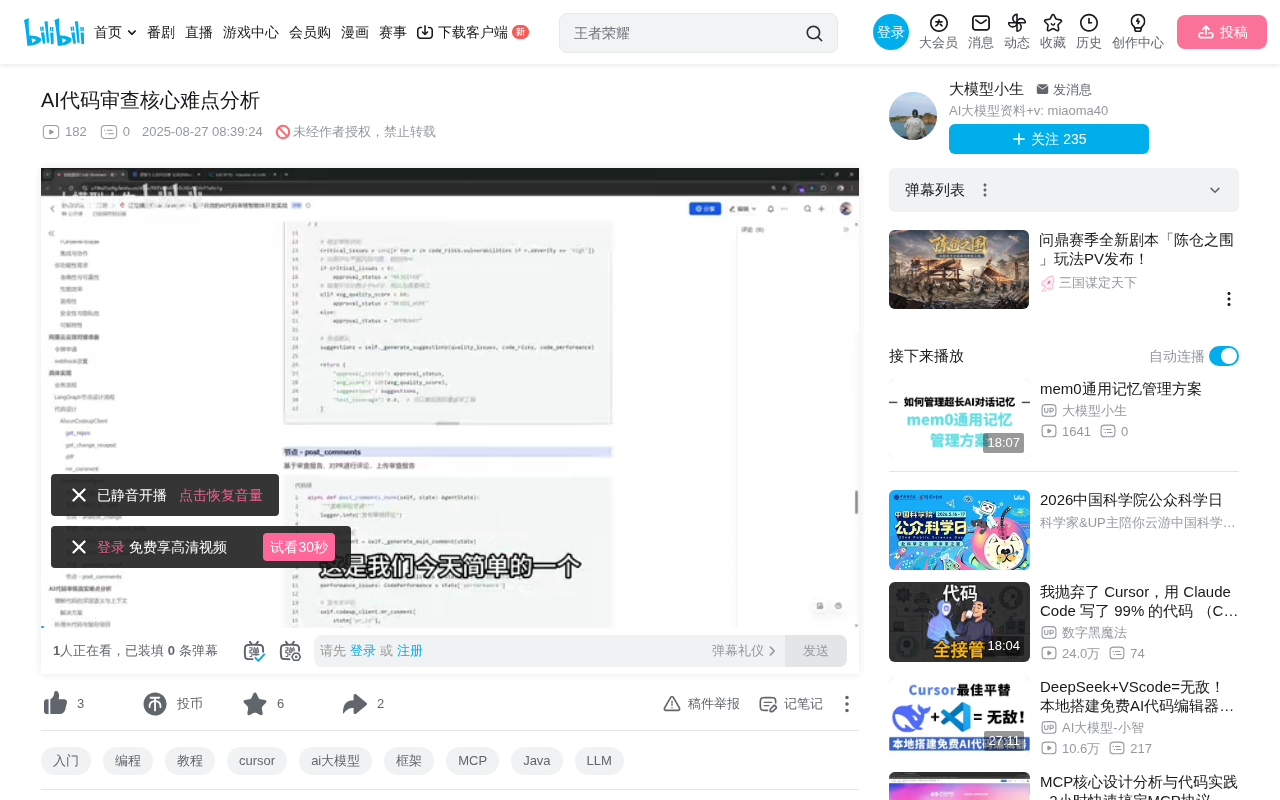
AI Code Review from 30 to 80 Points: A Complete Guide to AST + RAG Architecture Challenges
Deep dive into AI code review system architecture with AST parsing, RAG retrieval, and vector databases. Learn how to boost review effectiveness from 30% to 80%.
Read more →