#domain-specific LLM
388 related articles

·3 min
No Local LLM Deployment Needed: A Complete Methodology for Systematically Researching and Testing AI Guardrails
Learn how to systematically research and test AI guardrails without local LLM deployment, using cloud APIs, adversarial test sets, and layered validation strategies.
Read more →

·2 min
Anthropic Launches Official Claude Code Plugin Directory: A Curated High-Quality Extension Ecosystem
Anthropic launches claude-plugins-official, a curated directory of high-quality Claude Code plugins. Learn about its positioning, core value, and impact on the AI coding ecosystem.
Read more →

·3 min
Gemini Omni Flash Sparks Debate: Why No Pro Version?
Google released Gemini Omni Flash with no Pro version, sparking community debate on why Flash came first and what it reveals about the AI industry's shift from performance races to efficiency.
Read more →

·2 min
Qwen3.8 27B Scores 52 Points: How a Mid-Size Open-Source Model Is Rewriting the Performance Landscape
Alibaba's Qwen3.8 27B scores 52 on Artificial Analysis, rivaling flagship models with just 27B parameters. Explore its performance, local deployment advantages, and impact on the open-source model landscape.
Read more →

·4 min
AI Large Language Model Learning Roadmap for Beginners: From Transformer Principles to Project Practice
A complete learning roadmap for beginners to systematically study AI large language models, covering Transformer principles, Prompt Engineering, RAG, Agent, fine-tuning, and enterprise projects.
Read more →

·3 min
Self-Hosted ASR Models vs. Cloud APIs: A Comprehensive Cost and Reliability Comparison
In-depth analysis comparing self-hosted ASR open-source models vs. cloud speech recognition APIs like Google, covering cost differences, reliability, and break-even calculations for Whisper, IBM Granite, and more.
Read more →

·4 min
Real-World Challenges and Strategies for Production-Grade RAG Systems
Deep dive into core challenges of production-grade RAG systems, covering retrieval quality, hybrid search, offline evaluation, production monitoring metrics, latency-cost trade-offs, and security controls.
Read more →
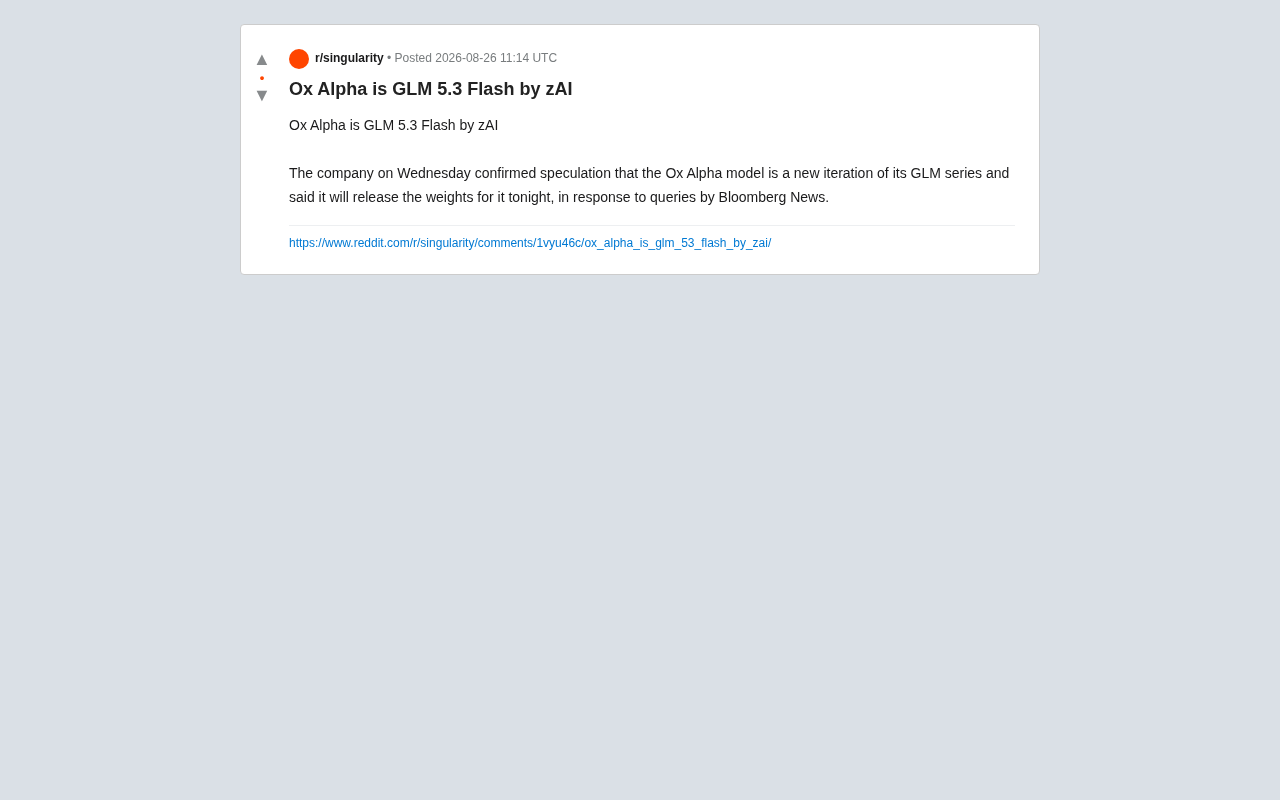
·2 min
GLM 5.3 Flash Officially Confirmed: Zhipu AI Reveals Ox Alpha's True Identity and Releases Weights
Zhipu AI confirms mysterious model Ox Alpha is GLM 5.3 Flash and announces open-weight release. Analysis of its Flash positioning, strategic implications, and impact on the open-source LLM ecosystem.
Read more →

·2 min
Semantica: Weaving Scattered Data into a Traceable Knowledge Network
Deep dive into how Semantica uses knowledge graphs + LLMs to auto-organize enterprise data into visual networks with AI reasoning, decision logging, and full source traceability.
Read more →

·4 min
How Generative AI Can Meet Innovation Requirements for R&D Tax Credits
Exploring how generative AI applications can build certifiable technical innovation at the algorithm and interface levels to meet R&D tax credit eligibility requirements.
Read more →

·3 min
Same Prompt Fed to 11 AI Models — Why Did They Produce 11 Different Answers?
Testing the same prompt across GPT, Claude, Gemini, and 11 LLMs reveals vastly different results. Learn why models differ and how to build multi-model evaluation and routing strategies.
Read more →

·3 min
How to Become an AI Developer? A Systematic Beginner's Roadmap
A complete learning roadmap to become an AI developer from scratch: covering Python basics, math foundations, ML/DL core concepts, LLM application development, and hands-on project experience.
Read more →

·4 min
Top 10 Hottest AI Skills in the Programming World: From Methodologies to Workflows Fully Explained
In-depth review of the 10 hottest AI Skills in programming, covering Super Powers, MCP Builder, Composio and more—how Skills enable structured workflows, automated testing, and external connections.
Read more →

·3 min
Rhombus Programming Language 1.1 Released: A Modern Syntax Exploration Built on Racket
Rhombus 1.1 is released—a programming language built on Racket featuring infix syntax, a powerful macro system, and modern readability. Explore its design philosophy and significance.
Read more →

·4 min
LangChain in Practice: Why It Remains the Core Framework for Agent Development
Why learning the LangChain framework beats chasing AI tools like Cursor and Claude Code. Covers Agent development thinking, token planning, and LangGraph.
Read more →

·3 min
Hands-On Tutorial: Fully Automated 3Dmigoto Mod Reverse Engineering with Local Ollama Small Models
Learn how to use locally deployed Ollama small models for fully automated 3Dmigoto Mod reverse engineering—covering setup, hardware requirements, demos, and tips for zero-cost batch processing.
Read more →

·3 min
The Post-Training Data Dilemma: Quantity vs. Quality? The Diminishing Marginal Returns of Synthetic Data
Exploring the post-training data dilemma: why scaling synthetic data hits diminishing returns, and how the industry is shifting from data quantity to quality curation for SFT and RL.
Read more →

·3 min
The Cursor Agents Window Controversy: The Tug-of-War Between AI Coding Efficiency and Developer Control
Cursor's push for Agents Window sparks developer backlash. Does running multiple AI Agents in parallel truly boost coding efficiency? An in-depth look at the tension between efficiency and control.
Read more →

·2 min
Opus 5 Released: Dual Upgrade in Token Efficiency and Intelligence, Better Coding Experience
Anthropic releases Opus 5 with significant cross-domain token efficiency gains alongside higher intelligence. Excels at coding tasks with faster responses and lower costs, marking a new efficiency era in LLM competition.
Read more →

·4 min
Introduction to Large Language Models: Your First Lesson from Principles to Security Practice
A foundational LLM course for security professionals covering Token probability prediction, hallucination causes, and China's open-source models to build cognitive foundations for AI-powered attack-and-defense exercises.
Read more →