#execution trace
1229 related articles

·3 min
Getting Started with AI Large Models: A Complete Technical Overview from Machine Learning to Agents
A systematic overview of the evolution from AI, machine learning, deep learning, and Transformer to LLMs, covering generative AI principles, model selection, and the future of AI Agents.
Read more →

·1 min
WikiSkill Paper Explained: Why a 4B Small Model Can Be a Great Teacher for a 27B Large Model
Deep dive into the WikiSkill paper's three-layer architecture, revealing why skills written by a 4B model outperform those by a 27B model for agent self-improvement.
Read more →

·3 min
Harness Engineering: A Three-Layer Architecture for Production-Ready AI Agents
Explore Harness Engineering's three-layer architecture — Information, Constraint, and Automation layers — for building production-ready AI Agents with stability and control.
Read more →

·3 min
DeepSeek Harness In-Depth Review: An AI Coding Agent Where Everything Is a Plugin
In-depth review of DeepSeek Harness Developer Preview: how its Codex plugin architecture makes models, tools, and execution loops fully reconfigurable.
Read more →

·5 min
AI Agent Skill Stack Fully Decoded: Building Professional Agents with 16 Pluggable Skills
Deep dive into 16 practical AI Agent Skills covering code review, evals, frontend design, communication, memory, and automation — revealing the modular methodology behind Agent engineering.
Read more →

·2 min
Hidden ComfyUI Bug: What Caused H3 Video Generation to Slow Down 4x and How to Fix It
A recent ComfyUI update introduced a hidden performance bug causing MiniMax H3 video generation to slow down ~4x. Learn the root cause — a v.clone() memory optimization side effect — and how to fix it.
Read more →

·4 min
DeepSeek V4 Pro Hands-On Review: The Precision King That Tops Both CFD and FPV Benchmarks
Bilibili creator benchmarks DeepSeek V4 Pro against top LLMs across 6 physics simulation tasks. DeepSeek scores 9 in both CFD and FPV, earning the title of precision king.
Read more →

·3 min
What It Means That Anthropic's Automated Alignment Researcher Outperforms Human Researchers
Anthropic's automated alignment researcher outperforms humans on specific tasks. This article analyzes the technical logic, implications, and recursive safety risks of automating AI alignment research.
Read more →

·4 min
Can't Stick with Self-Studying Deep Learning? The Study Buddy Model Can Carry You Through 60 Days
Struggling to self-study deep learning? Learn how the study buddy model uses peer accountability to help you push through a 60-day deep learning plan.
Read more →

·3 min
Practical Guide to Analytical AI: Making LLMs Actually Work for Data Analysis
Deep dive into Analytical AI architecture and practices: from query generation to result validation, master key techniques for reliable LLM-powered data analysis.
Read more →

·3 min
Three Costly Lessons from Building AI Agents: Schema Validation, Circuit Breakers, and Retry Strategies in Practice
Three real-world lessons from building AI Agents: schema leniency over strict validation, consecutive-failure circuit breakers, and smart retry strategies to prevent double billing.
Read more →

·3 min
The Automated Agent Improvement Loop: A Deep Dive into Evaluation and Environment Engineering
A deep dive into the Agent improvement loop: automated evaluation (Eval) and environment engineering, covering LLM-as-a-Judge, trajectory evaluation, and simulation environments for scalable Agent deployment.
Read more →

·3 min
Game Behavior Data Collection: Frame-Level Aligned Human Action Data for Imitation Learning
An open-source game behavior capture tool that synchronously records gameplay video and keyboard/mouse input with frame-level alignment, providing structured datasets for imitation learning and world model research.
Read more →

·4 min
LangGraph Multi-Agent Routing: Production-Grade Orchestrator-Worker Architecture Design
Deep dive into LangGraph Orchestrator-Worker architecture: task DAG planning, checkpoint_ns state isolation, interrupt management, and production best practices for multi-agent systems.
Read more →

·3 min
Prompt Governance: Achieving Instant Rollbacks with a Version Registry
Learn how an immutable-version prompt registry solves fragmented prompt management, enabling instant rollbacks, precise tracing, and engineering-grade governance for AI Agent systems.
Read more →

·3 min
Oasis Smart Workspace: A New Paradigm for Human-AI Agent Collaboration
Deep analysis of Oasis smart workspace and how its agent aggregation, knowledge compounding, and adaptive evolution redefine human-AI collaboration.
Read more →

·3 min
Hermes Agent Meets Grafana: A Practical Guide to AI Agent Observability
Explore why AI Agents need observability and how Hermes Agent integrates with Grafana for metrics, tracing, and log analysis to build stable, production-ready agent systems.
Read more →

·3 min
Cloak Fingerprint Browser + MCP: Letting AI Automate the Entire Reverse Engineering and Packet Capture Workflow
How Cloak's source-code-level fingerprint browser and 69 MCP tools let AI automate the full reverse engineering workflow—from bypassing CAPTCHAs to packet capture.
Read more →
·3 min
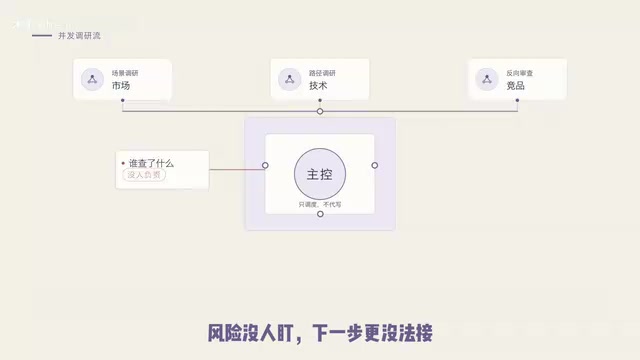
Agent Teams in Practice: A Guide to Multi-Agent Collaboration and Real-World Implementation
A deep dive into Agent Teams methodology for multi-agent collaboration, covering role division, adversarial review, orchestration, and structured deliverables for enterprise-grade AI projects.
Read more →

·3 min
Human Behavior: How AI Agents Close the Loop on Product Analytics Issues
Human Behavior is an AI-powered product analytics tool that uses a four-step pipeline — collect, understand, act, loop — to let AI agents automatically identify UX issues and submit fixes.
Read more →