#LLM plugin
1121 related articles

·4 min
Hands-On Review of AI Coding Skill Libraries: How Markdown Files Became a Productivity Superweapon
Hands-on review of Matt Pocock's AI Skills and P-Stack coding skill libraries, covering unslopped AI text cleanup, grilling-style requirement clarification, and practical setup tips.
Read more →

·3 min
DeepSeek Harness In-Depth Review: An AI Coding Agent Where Everything Is a Plugin
In-depth review of DeepSeek Harness Developer Preview: how its Codex plugin architecture makes models, tools, and execution loops fully reconfigurable.
Read more →

·2 min
198K GitHub Stars in Two Weeks: What Do Stars Actually Measure?
An open-source project gained 198K GitHub Stars in two weeks without a single stable release. What do stars really measure? A practical 20-second framework to assess viral project maturity.
Read more →

·5 min
AI Agent Skill Stack Fully Decoded: Building Professional Agents with 16 Pluggable Skills
Deep dive into 16 practical AI Agent Skills covering code review, evals, frontend design, communication, memory, and automation — revealing the modular methodology behind Agent engineering.
Read more →

·3 min
Cursor Acquired by SpaceX? How Developers Should Prepare for AI Coding Tool Upheaval
The rumored SpaceX acquisition of Cursor has developers buzzing. We analyze data security, product direction risks, and practical exit strategies for teams.
Read more →

·3 min
OpenAI Terminates Partnership with Cursor: Model Access Cut Off November 12 — How Developers Should Respond
OpenAI will cut off model access to Cursor on November 12 following SpaceX's acquisition. Learn the reasons, developer impact, and multi-model coping strategies.
Read more →

·5 min
Tencent Hunyuan WorldClaw: Generate Editable 3D Worlds from a Single Sentence
Tencent Hunyuan's WorldClaw generates explorable, editable 3D worlds from text. Deep dive into its multi-model Agent architecture, AI-native game engines, AI pharma funding, and data strategy shifts.
Read more →

·3 min
Getting Started with Coze: A Complete Guide to the Three Types of AI Agent Tools
A complete guide to three types of AI Agent tools: building platforms (Coze Studio, Dify), agent software (Coze, Cloud Code), and dev frameworks (LangChain). Find the right tool for your skill level.
Read more →

·3 min
Three Costly Lessons from Building AI Agents: Schema Validation, Circuit Breakers, and Retry Strategies in Practice
Three real-world lessons from building AI Agents: schema leniency over strict validation, consecutive-failure circuit breakers, and smart retry strategies to prevent double billing.
Read more →

·4 min
Gumloop Hands-On Tutorial: A Complete Guide to Building AI Automation Workflows with Zero Code
Gumloop co-founder demos building zero-code AI automation workflows for lead research, SEO content production, and competitive ad analysis with subflows, custom nodes, and Chrome extension.
Read more →

·3 min
The Four Forms of OpenAI Codex Explained: Comparison with Claude Code and Best Usage Strategies
Deep analysis of OpenAI Codex's four forms (CLI, web, IDE plugin, APP), comparison with Claude Code on price, stability, and frontend/backend strengths, plus the optimal APP + VS Code workflow.
Read more →

·3 min
Cloak Fingerprint Browser + MCP: Letting AI Automate the Entire Reverse Engineering and Packet Capture Workflow
How Cloak's source-code-level fingerprint browser and 69 MCP tools let AI automate the full reverse engineering workflow—from bypassing CAPTCHAs to packet capture.
Read more →

·3 min
Agent Skills Explained: Plug-and-Play Skill Packs for AI Agents
A deep dive into Agent Skills: the modular, low-cost, plug-and-play approach to extending AI Agent capabilities, and how it differs from Multi-Agent architecture.
Read more →

·2 min
Anthropic Launches Official Claude Code Plugin Directory: A Curated High-Quality Extension Ecosystem
Anthropic launches claude-plugins-official, a curated directory of high-quality Claude Code plugins. Learn about its positioning, core value, and impact on the AI coding ecosystem.
Read more →

·3 min
AI Agent in Practice: Building an Automated Interior Design Rendering Workflow with Coze
Step-by-step guide to building an AI Agent workflow on Coze that auto-generates interior design renderings from floor plans, covering node setup, prompts, and fault tolerance.
Read more →

·3 min
New MCP Release: How Stateless Protocol Is Reshaping AI Tool-Calling Architecture
MCP's new version introduces stateless protocol design for better scalability and reliability. A free 5-hour livestream on Sept 9 covers protocol evolution, server building, and the AI agent ecosystem.
Read more →
·3 min
Qwen3-VL Multimodal Fine-Tuning in Practice: Architecture Deep Dive and Complete LoRA Fine-Tuning Guide
Deep dive into Qwen3-VL vision-language model architecture, covering Vision Encoder alignment, LLM backbone principles, and complete LoRA fine-tuning workflow from setup to training and testing.
Read more →

·3 min
Harness Multi-Agent Framework: A Deep Dive into Planner→Builder→Evaluator Three-Agent Collaboration
Deep dive into the Harness multi-agent framework's three-agent paradigm (Planner, Builder, Evaluator), covering Agent Loop design, circular invocation prevention, Sandbox isolation, and A2A vs SubAgent selection strategies.
Read more →

·3 min
GitHub Copilot Canvas Explained: Five Practical Use Cases Showcasing Visual AI Collaboration
Explore GitHub Copilot Canvas through five practical use cases—issue triage, architecture diagrams, session management & more—upgrading from chat-based AI to visual collaboration.
Read more →
·2 min
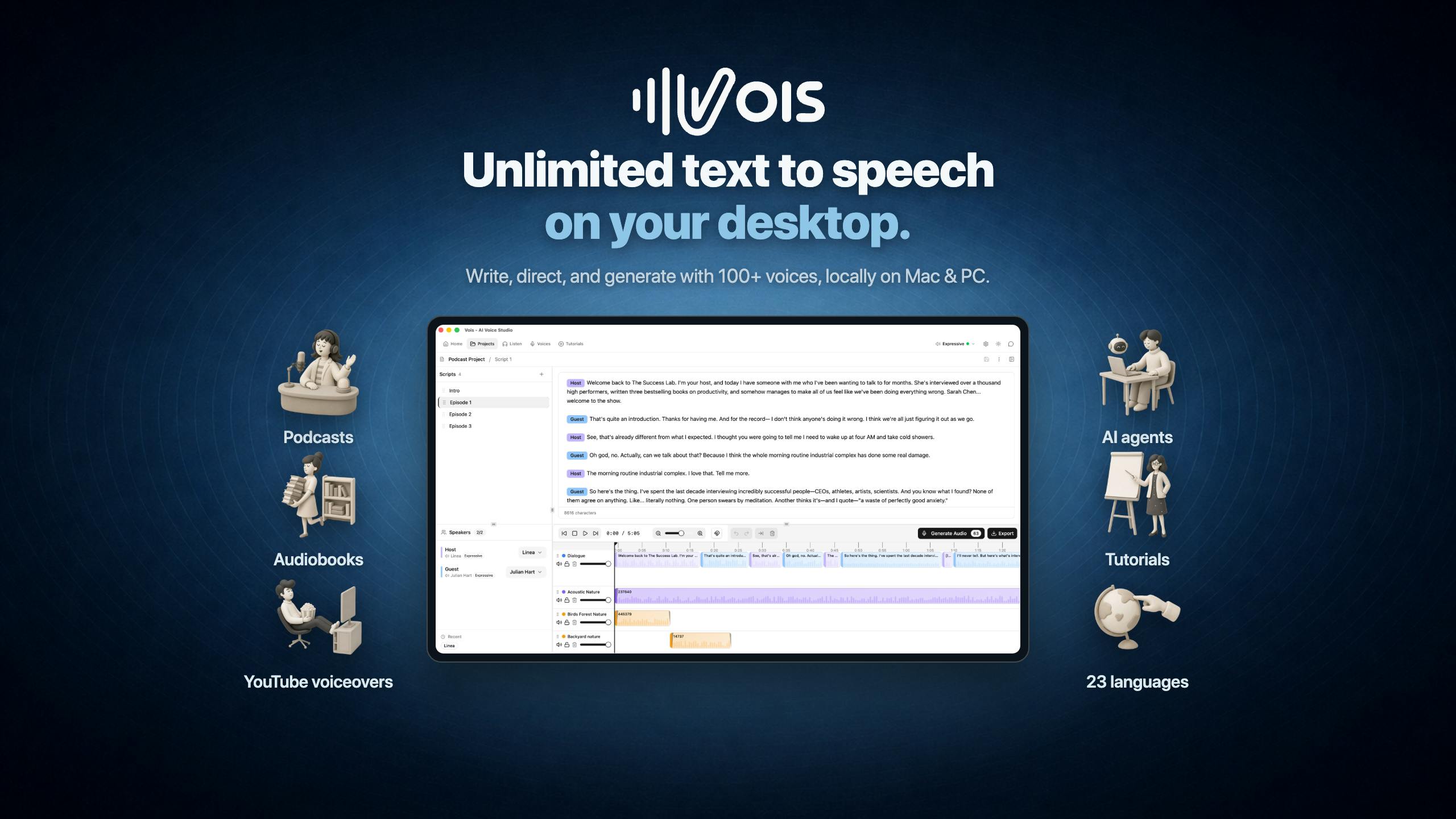
Vois 2.0 Review: Unlimited Voice Synthesis for $10/Month — Can It Replace ElevenLabs?
Vois 2.0 is a desktop AI voice synthesis tool offering unlimited generation with no per-character fees, 100+ voices, voice cloning, multi-speaker timeline, and 600+ languages for $10/month.
Read more →