#open-source Agent development
2838 related articles

·4 min
WorldCloud: An Agentic Framework for Generating Explorable 3D Open Worlds from a Single Sentence
Deep dive into WorldCloud's technical architecture: how multi-agent collaboration generates large-scale, editable, explorable 3D open worlds from a single natural language description.
Read more →

·3 min
Agent Skills Explained: Plug-and-Play Skill Packs for AI Agents
A deep dive into Agent Skills: the modular, low-cost, plug-and-play approach to extending AI Agent capabilities, and how it differs from Multi-Agent architecture.
Read more →

·3 min
From Web Developer to AI Engineer: A Pragmatic Career Transition Roadmap
A pragmatic roadmap for web developers transitioning to AI engineering—from solidifying math foundations and mastering Transformers to hands-on fine-tuning and deployment.
Read more →

·3 min
One Decorator to Solve the Duplicate Tool Execution Problem in AI Agents
The idempotent-tools Python library prevents duplicate tool execution in AI Agents with a single @idempotent decorator, supporting SQLite, Redis, LangGraph, and CrewAI.
Read more →

·3 min
Human Behavior: How AI Agents Close the Loop on Product Analytics Issues
Human Behavior is an AI-powered product analytics tool that uses a four-step pipeline — collect, understand, act, loop — to let AI agents automatically identify UX issues and submit fixes.
Read more →

·4 min
Benchmarking with Production Data: A Model Migration That Cut Costs by 91%
How to build free eval sets from production logs, validate candidate models with a two-layer architecture (deterministic checks + blind LLM judge), and migrate 14 of 16 tasks to cut 91% of token costs.
Read more →

·3 min
New MCP Release: How Stateless Protocol Is Reshaping AI Tool-Calling Architecture
MCP's new version introduces stateless protocol design for better scalability and reliability. A free 5-hour livestream on Sept 9 covers protocol evolution, server building, and the AI agent ecosystem.
Read more →

·3 min
USBridge-Remote: An Open-Source Remote Desktop Tool Based on the Moonlight Protocol
USBridge-Remote is an open-source self-hosted remote access tool featuring the Moonlight protocol for low-latency streaming, native Wayland support, Tailscale P2P connectivity, and cross-platform coverage.
Read more →

·2 min
GitHub Daily · August 29: In-Browser Code Intelligence and the Rise of Native PHP Compilation
GitHub Trending highlights: GitNexus brings code knowledge graphs to the browser, tailcat drops the control plane for encrypted networking, and typephp compiles PHP to native binaries.
Read more →

·3 min
Harness Multi-Agent Framework: A Deep Dive into Planner→Builder→Evaluator Three-Agent Collaboration
Deep dive into the Harness multi-agent framework's three-agent paradigm (Planner, Builder, Evaluator), covering Agent Loop design, circular invocation prevention, Sandbox isolation, and A2A vs SubAgent selection strategies.
Read more →

·2 min
Skilldocs: A Real-Time Collaborative Markdown Editor That Bridges AI Agent Workflows
Skilldocs is a real-time collaborative Markdown editor for developers with cursor sync, inline comments, and live rendering that hands off context-rich docs directly to AI Agents.
Read more →

·4 min
AI Agent Learning Roadmap: A Four-Stage Guide from Zero to Production
A complete AI Agent learning roadmap covering four stages—foundations, core frameworks, hands-on projects, and advanced mastery—to help beginners build production-ready agents in six months.
Read more →
·1 min
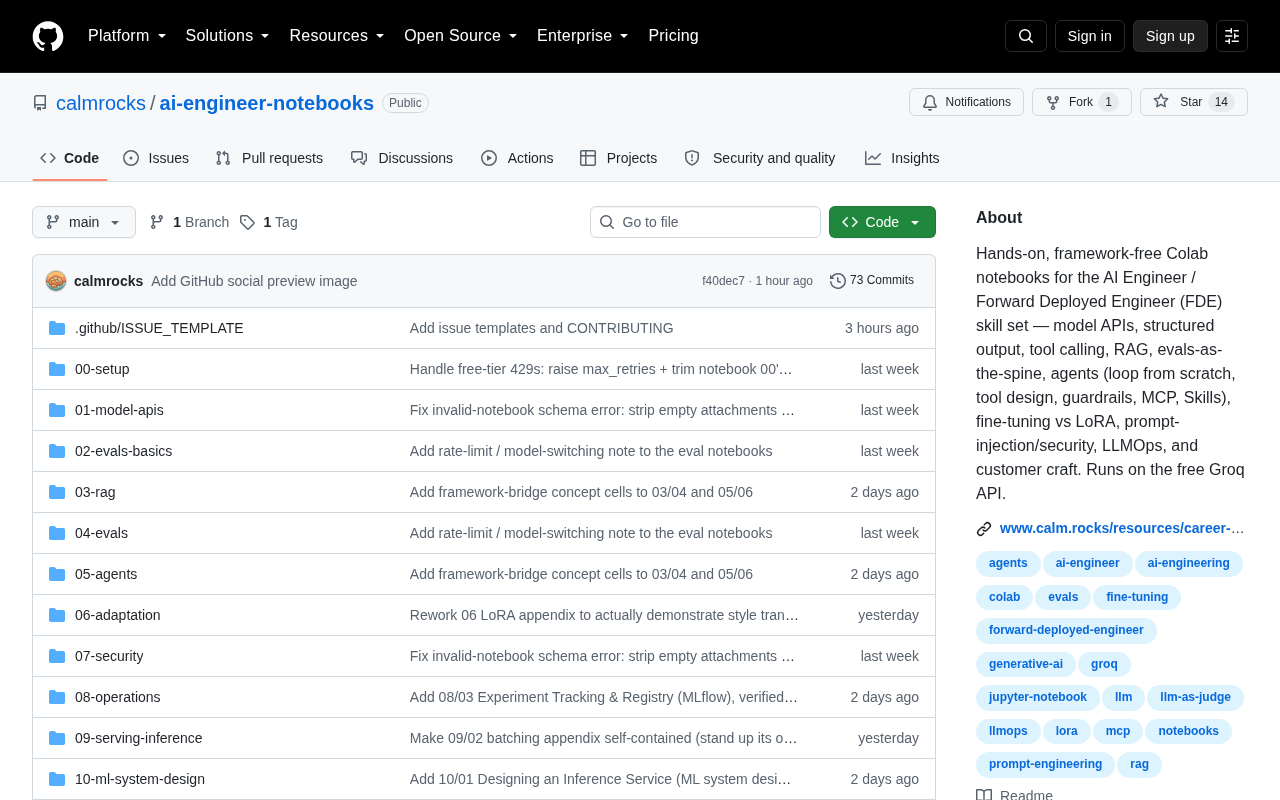
Implementing RAG and Agents Without Frameworks: An Essential Skill for AI Engineers
Explore AI Engineer Notebooks: a free, framework-free open-source project for learning RAG, Agents, and Evals from scratch with plain code on Google Colab.
Read more →

·4 min
Transitioning to AI Agent Development: A Complete Three-Stage Learning Path for Programmers
Why do programmers keep failing at AI Agent development? This guide breaks down a 3-stage learning path: ReAct & Tool Calling fundamentals, LangChain engineering, and production-grade project delivery.
Read more →

·3 min
Getting Started with Agent Skills: A Complete Guide from Prompts to Intelligent Skills
Deep dive into AI Agent Skills' four components (skill.md, references, scripts, assets), explaining how Skills differ from prompts and how to build reusable intelligent skill systems.
Read more →

·4 min
AI Large Language Model Learning Roadmap for Beginners: From Transformer Principles to Project Practice
A complete learning roadmap for beginners to systematically study AI large language models, covering Transformer principles, Prompt Engineering, RAG, Agent, fine-tuning, and enterprise projects.
Read more →

·3 min
Self-Hosted ASR Models vs. Cloud APIs: A Comprehensive Cost and Reliability Comparison
In-depth analysis comparing self-hosted ASR open-source models vs. cloud speech recognition APIs like Google, covering cost differences, reliability, and break-even calculations for Whisper, IBM Granite, and more.
Read more →

·2 min
The Complete Guide to AI Software Factories: Rebuilding the Entire Development Workflow with Agents
A deep dive into AI Software Factory concepts and practices — from manual tickets to automated PRs, learn how to build development pipelines with AI agents.
Read more →
·3 min
The Fascinating Real-World Counterparts of OpenAI Gym Reinforcement Learning Environments
Exploring how OpenAI Gym RL environments map to real-world scenarios, from CartPole to MountainCar, covering design principles and the sim-to-real transfer challenge.
Read more →

·3 min
After Being Laid Off by AI, a Programmer Open-Sourced an AI CEO: Who Should the Automation Axe Really Fall On?
A CEO used AI as a reason to fire developers. They responded by open-sourcing an AI CEO, exposing the power bias in automation narratives and who really should be replaced.
Read more →