#reference capabilities
3604 related articles

·2 min
OpenAI Funds 14 Projects: An Evidence-Based Approach to AI-Driven Economic Opportunity
OpenAI funds 14 independent projects across employment, public safety, science, and democratic accountability to test how AI can expand economic opportunity with real-world evidence.
Read more →

·2 min
Quick RSS: A Privacy-First Desktop RSS Reader That Says Goodbye to Algorithmic Recommendations
Quick RSS is a privacy-first desktop RSS reader with local data storage and no cloud sync. Its simple, intuitive design helps users escape algorithmic recommendations and regain control over their information sources.
Read more →

·4 min
Deep Comparison of Four Open-Source AI Coding Agents: DeepSeek Harness vs. Prime Agent vs. Pi vs. OpenCode — Which One Should You Choose?
Deep comparison of four open-source AI coding agent frameworks: DeepSeek Harness, Prime Agent, Pi, and OpenCode — covering architecture, performance, security, and use cases.
Read more →

·2 min
Annotate: A New Tool That Turns Screen Recordings into AI Coding Prompts
Annotate is a free local-first tool that turns screen recordings with annotations and voice into multimodal prompts for AI coding agents like Cursor, Claude, and Codex.
Read more →

·3 min
GitHub Daily · August 24: The Claude Code Ecosystem Explodes
GitHub Trending Aug 24: Four projects built on Claude Code signal its evolution into a programmable Agent runtime; Karpathy's single-file config hits 200K stars.
Read more →

·2 min
Ox Alpha Suspected to Be Google Gemini: The Competitive Strategy Behind Anonymous Model Testing
AI community debates whether mysterious model Ox Alpha is a Google Gemini variant. Analysis of anonymous model testing strategies, industry practices, and implications for AI competition.
Read more →

·2 min
Qwen3.8-27B Becomes the Most Popular Open-Source Model in History: A Dominant Lead Over DeepSeek-R1
Qwen3.8-27B becomes the most-used open-source model on Unsloth, far surpassing DeepSeek-R1 and Qwen3.6-35B-A3B. Deployable on consumer GPUs after quantization, it's now the top choice for developers.
Read more →

·2 min
Opus 5 Released: Dual Upgrade in Token Efficiency and Intelligence, Better Coding Experience
Anthropic releases Opus 5 with significant cross-domain token efficiency gains alongside higher intelligence. Excels at coding tasks with faster responses and lower costs, marking a new efficiency era in LLM competition.
Read more →

·2 min
New Gemini Model Coming Soon? Decoding Reddit Community Rumors with Rational Analysis
Reddit AI community rumors suggest a new Google Gemini model may be imminent. This article analyzes community signals, pricing strategies, and the cost-efficiency competition among LLMs.
Read more →

·3 min
Solving Cumulative Text Drift: A Practical Guide to Anchor-Based Alignment for Historical Manuscripts and Digital Transcriptions
Deep dive into cumulative text drift in historical handwritten document datasets, introducing anchor-based synchronization with spelling normalization, multimodal alignment, and Compute-to-Data security for VLM training.
Read more →

·3 min
AI-Generated TV Shows: Will Audiences Actually Pay to Watch Them?
AI-generated TV shows are moving from tech demos to consumable products. This article analyzes audience acceptance through label bias, genre fit, and content quality.
Read more →

·3 min
How AI Video Generation Works: Diffusion Models, Motion Transfer, and Optical Flow Explained
Deep dive into three core AI video generation technologies: diffusion models, motion transfer, and optical flow — the tech behind Sora, Runway, and more.
Read more →
·2 min
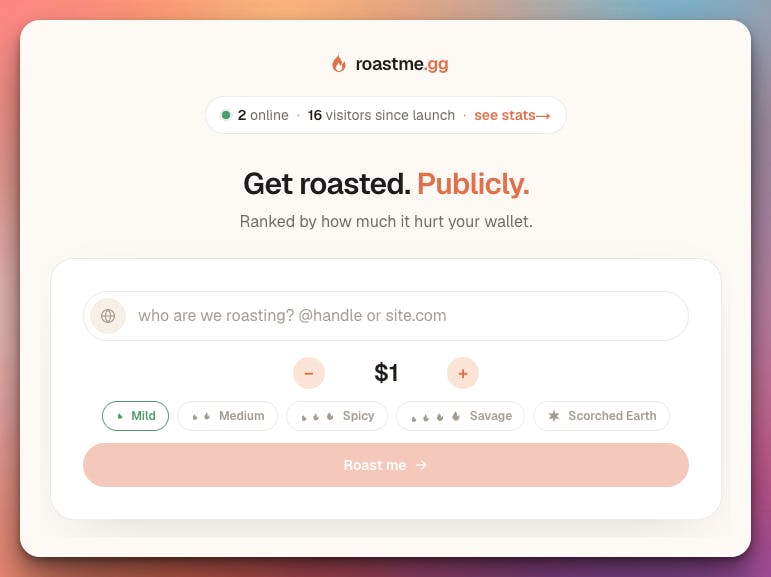
roastme.gg: How a Counterintuitive Product That Charges Users to Get Publicly Roasted by AI Engineered Viral Spread
Deep dive into roastme.gg's product design: users pay $1-$1000 to get publicly roasted by Claude AI, leveraging leaderboards and social cards for viral spread. Exploring AI entertainment business models.
Read more →

·3 min
TruIntel Review: An Analytics Tool for Monitoring Brand Visibility in AI Search
TruIntel is a brand visibility analytics tool for AI search, tracking how brands are cited in ChatGPT, Gemini, and Perplexity responses. Deep dive into GEO trends and practical value.
Read more →

·3 min
OBLITERATUS Open-Source Project Goes Viral: Analyzing the AI LLM Jailbreak Attack-Defense Game
GitHub project OBLITERATUS hits 7900+ Stars, aggregating LLM jailbreak prompt techniques. Deep analysis of AI jailbreak principles, red team security research, and defense-in-depth strategies.
Read more →

·3 min
Meta's Alleged Addictive Design: A Full Breakdown of the Hook, Hold, Harvest, and Hide Strategy
Meta lawsuit reveals a four-step product design strategy: Hook, Hold, Harvest, Hide. A deep analysis of addictive design in the attention economy and its ethical implications for the AI era.
Read more →

·2 min
GPT-5.6 Price Cut Over 20%: A Complete Analysis of AI Competition from OpenAI, DeepSeek Multimodal, and More
OpenAI cuts GPT-5.6 Sol prices by over 20%; Codex hits 20M active users with security scanning; DeepSeek launches V4 Flash Vision multimodal model; anonymous OS Alpha tops API call rankings.
Read more →

·2 min
KerasFormers: A Deep Dive into the Pure Keras 3 Cross-Framework Pretrained Transformer Model Library
KerasFormers is a pretrained Transformer library built on Keras 3's multi-backend architecture, enabling seamless switching between JAX, PyTorch, and TensorFlow.
Read more →

·2 min
Munder Difflin: A Multi-Agent Framework for Running a Virtual Office with AI Clones
Munder Difflin is an open-source multi-agent framework that lets users build a virtual office with AI clones. This article explores its Agent Harness architecture, role-based collaboration, and real-world challenges.
Read more →

·4 min
Great Expectations vs Evidently: A Guide to Choosing the Right Data Quality Tool
In-depth comparison of Great Expectations and Evidently — two open-source data quality tools — covering design philosophy, use cases, data validation, drift monitoring, and integration to help teams choose the right fit.
Read more →