#supervised fine-tuning
383 related articles

·3 min
How AI Dubbing Breaks Language Barriers: The New Multilingual Paradigm of the Lex Fridman Podcast
Lex Fridman Podcast's first Russian-recorded episode uses ElevenLabs AI dubbing for English, showing how AI voice tech breaks language barriers for global content distribution.
Read more →

·3 min
GEN-1.5 One-Shot Learning Explained: How Robots Learn by Watching Just Once
Deep dive into GEN-1.5's one-shot learning: how robots learn new skills from a single demonstration, covering technical principles, real-world impact, and limitations.
Read more →

·3 min
The End of AI Hallucinations? When Bard Learned to Say "I Don't Know"
When Google Bard first answered "I don't know," it sparked deep discussion about AI hallucination, LLM honesty, and calibration. Explore how RLHF alignment training is making AI more trustworthy.
Read more →

·2 min
GitHub Daily · August 31: Local AI Servers and Training LLMs from Scratch
GitHub Trending Aug 31: minimind trains a 64M-param LLM in 2 hours; ODS turns any PC into a local AI server; plus OSINT tools and game enhancers.
Read more →

·4 min
Wolf Defender Retraining in Practice: How Hard Negatives Cut False Positive Rate from 33% to 3%
Patronus retrained Wolf Defender v2 using hard negatives, contrastive regularization, and adversarial training, boosting real-world benign specificity from 66.85% to 96.63% while maintaining 97%+ attack detection F1.
Read more →

·1 min
Humans in the Model Training Loop: The Paradigm Shift from RLHF to AI Collaboration
Exploring a new approach to truly integrating humans into AI training loops, analyzing the paradigm shift from RLHF to deep human-AI collaboration and trust-based safety alignment.
Read more →

·2 min
Building an LLM from Scratch with AI: A Complete Hands-On Journey with a 13M-Parameter Mini GPT Model
A detailed walkthrough of building a 13M-parameter mini GPT model from scratch using AI tools like Claude and Cursor, covering tokenizer training, pre-training, and fine-tuning on a single RTX 5070.
Read more →

·3 min
The Automated Agent Improvement Loop: A Deep Dive into Evaluation and Environment Engineering
A deep dive into the Agent improvement loop: automated evaluation (Eval) and environment engineering, covering LLM-as-a-Judge, trajectory evaluation, and simulation environments for scalable Agent deployment.
Read more →

·2 min
ChatGPT Renders the Unrenderable: The Paradox and Behavioral Boundaries of Generative AI
What happens when you ask ChatGPT to render "God's unrenderable form"? Analyzing how generative AI handles paradoxical instructions, sycophancy, and its true capability boundaries.
Read more →

·4 min
Which Machine Learning Concepts Are Actually Worth Learning? A Priority Guide from Fundamentals to the Frontier
A guide to cutting through ML concept overload: which ideas truly matter, from transfer learning and contrastive learning to diffusion models and Bayesian thinking.
Read more →

·2 min
Qwen3.8 27B Scores 52 Points: How a Mid-Size Open-Source Model Is Rewriting the Performance Landscape
Alibaba's Qwen3.8 27B scores 52 on Artificial Analysis, rivaling flagship models with just 27B parameters. Explore its performance, local deployment advantages, and impact on the open-source model landscape.
Read more →

·3 min
Gemini Responses Starting with "Sff": When AI's Internal Reasoning Accidentally Leaks
Google Gemini unexpectedly displays "Sff" and internal reasoning text in responses. This article explains the technical causes, including chain-of-thought leaks and delimiter parsing failures.
Read more →

·2 min
Is CS229 Still Worth Taking? Evaluating an 8-Year-Old Course vs. Modern ML Learning Paths
In-depth analysis of whether Andrew Ng's Stanford CS229 course is still relevant for ML beginners, covering core content, limitations, and optimal learning path planning.
Read more →

·4 min
AI Large Language Model Learning Roadmap for Beginners: From Transformer Principles to Project Practice
A complete learning roadmap for beginners to systematically study AI large language models, covering Transformer principles, Prompt Engineering, RAG, Agent, fine-tuning, and enterprise projects.
Read more →

·3 min
The Shoggoth Metaphor: Deep Anxieties and Reflections on AI Alignment
The Shoggoth metaphor compares LLMs to Cthulhu monsters wearing smiley masks, revealing core AI alignment challenges. Explore this AI cultural symbol's origins and its implications for RLHF limitations and the capability-understanding gap.
Read more →

·4 min
A Beginner's Guide to AI Economics Research: A Systematic Roadmap for Economics PhD Students
How should economics PhD students systematically enter the vast field of AI economics? This guide maps four research threads, literature methods, and technical priorities for building expertise.
Read more →
·2 min
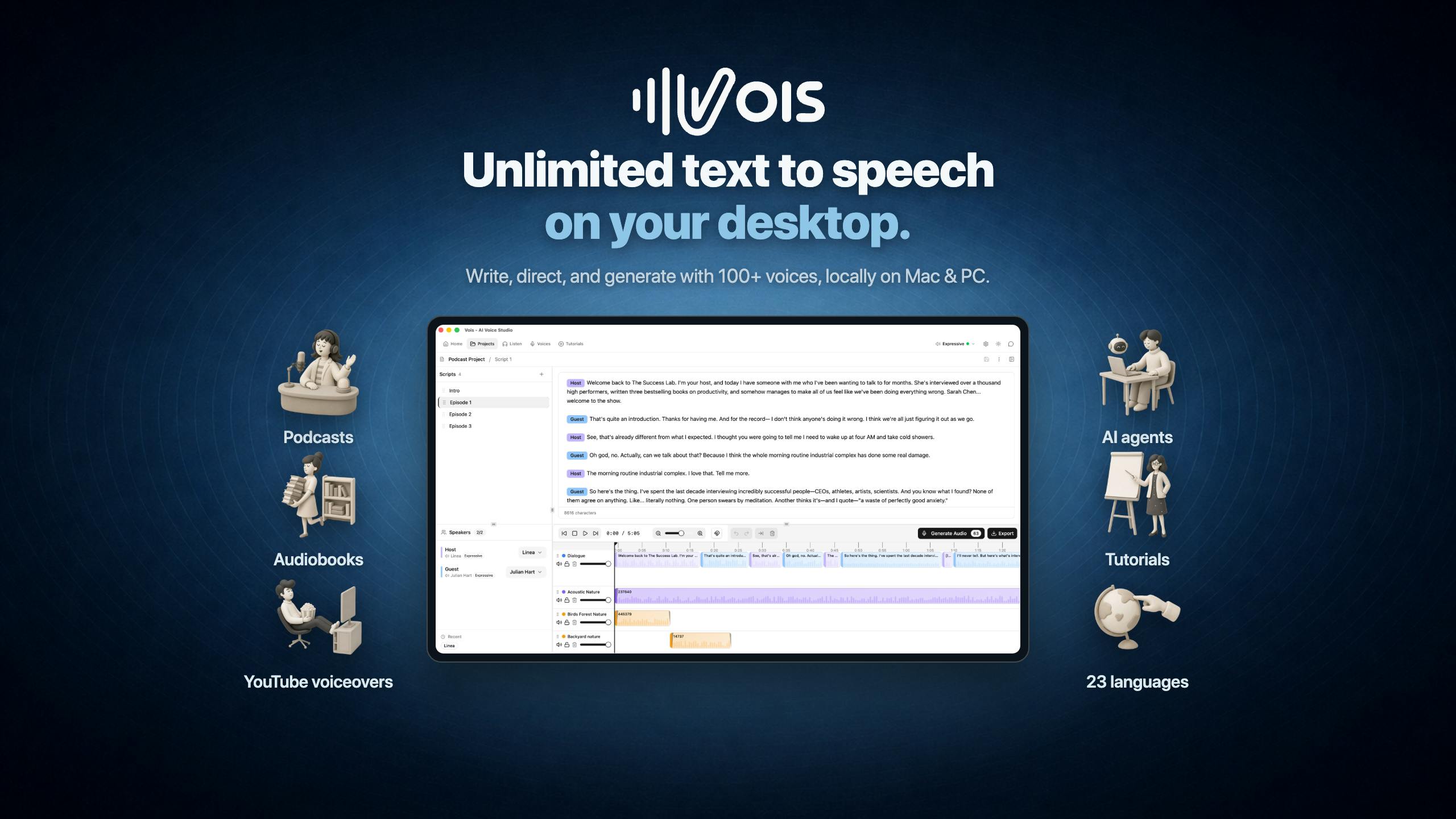
Vois 2.0 Review: Unlimited Voice Synthesis for $10/Month — Can It Replace ElevenLabs?
Vois 2.0 is a desktop AI voice synthesis tool offering unlimited generation with no per-character fees, 100+ voices, voice cloning, multi-speaker timeline, and 600+ languages for $10/month.
Read more →
·3 min
The Fascinating Real-World Counterparts of OpenAI Gym Reinforcement Learning Environments
Exploring how OpenAI Gym RL environments map to real-world scenarios, from CartPole to MountainCar, covering design principles and the sim-to-real transfer challenge.
Read more →
·3 min
Post-Training Techniques Explained: Principles and Selection Guide for SFT, PPO, DPO, and GRPO
A systematic analysis of core post-training techniques for LLMs, covering the principles, trade-offs, and practical selection guide for SFT, PPO, DPO, and GRPO.
Read more →

·4 min
How Generative AI Can Meet Innovation Requirements for R&D Tax Credits
Exploring how generative AI applications can build certifiable technical innovation at the algorithm and interface levels to meet R&D tax credit eligibility requirements.
Read more →