#Agent development
4033 related articles
·3 min
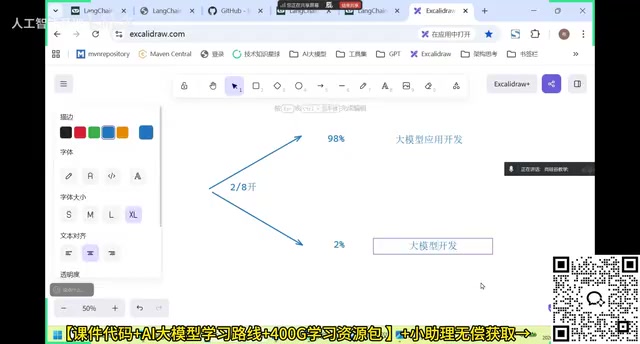
LangChain Practical Guide: From RAG Applications to Intelligent Agent Development
A comprehensive guide to LangChain: core concepts, RAG applications, Agent development, version selection (0.3/1.0), and career opportunities for Java/Python developers entering LLM development.
Read more →

·3 min
Multi-Repo Microservice Development: The Workspace-Level Configuration Gap in AI Agents
Explore why AI agent tools (Codex, Claude Code, Gemini) lack workspace-level config for multi-repo microservice dev, and discover practical solutions like symlinks, custom paths, and cascading config.
Read more →

·2 min
Getting Started with Coze AI Agent Development: A Complete Beginner's Guide
Coze is ByteDance's low-code AI agent platform with rich built-in plugins and a beginner-friendly Chinese interface. Learn features, pricing, Coze vs Dify comparison, and how to get started.
Read more →

·2 min
Getting Started with AI Agent Development: Master the Core Mindset and Clear the Zero-Experience Barrier
New to AI Agent development? Learn why core thinking—breaking down requirements, designing workflows, solving problems—matters more than memorizing APIs. Beginner roadmap included.
Read more →

·3 min
AI Agent Beginner's Guide: LLMs vs. Agents, and a Full Breakdown of Development Tools
What is an AI Agent? This guide explains the key differences between LLMs and Agents, breaks down the Agent formula (LLM + Workflow + Knowledge Base), and compares tools like Dify, Coze, LangChain, and LlamaIndex.
Read more →
Terrence Tao on AI Coding Agents: How …
·2 min
Terrence Tao on AI Coding Agents: How a Mathematician Sees the Transformation of App Development
Fields Medalist Terry Tao shares his experience with AI coding agents—rebuilding legacy apps and rapidly building new tools. A mathematician's view on their capabilities and impact.
Read more →

·2 min
AI Agent Learning Path: Mastering Intelligent Agent Development from 0 to 1
Many people learn tons of fragmented content yet remain confused. This article maps out the complete AI Agent knowledge landscape—from LLM and prompt basics, tool calling, and RAG to LangChain and multi-agent collaboration—with a clear learning order.
Read more →

·3 min
Getting Started with AI Agent Development: A Three-Step Practical Path with Python + LangChain
Learning AI Agent development is no longer daunting! This article outlines the simplest practical path: master just enough Python, grasp core LLM concepts, then build your first Agent with LangChain.
Read more →

·3 min
Langchain.js Agent Development: A Guide to Deconstructing the OpenClaw Engine Architecture
An in-depth analysis of AI agent development based on Langchain.js—comparing workflow agents and Agent Loops, deconstructing the TypeScript implementation path of an OpenClaw-like engine, covering structured output, MCP, and LangGraph.
Read more →
·6 min
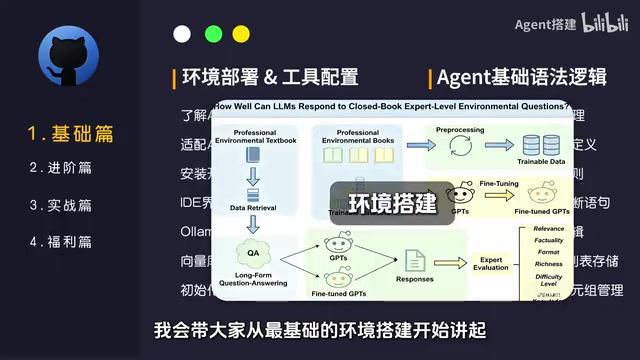
AI Agent Development Learning Path: Four Stages from Zero to Hands-On Projects
A systematic breakdown of the AI agent development learning path, covering four stages: fundamentals, RAG knowledge bases, tool use, multi-agent collaboration, and hands-on projects.
Read more →

·4 min
The Complete AI Agent Development Learning Path: From Zero to Enterprise-Grade Practice
A systematic AI Agent development learning path covering fundamentals, prompt engineering, tool calling, multi-agent collaboration, and hands-on practice with LangChain, CrewAI, and Dify.
Read more →

·3 min
The Four-Stage Learning Path for AI Agent Development: A Complete Guide from Beginner to Practitioner
A systematic guide to the four-stage AI Agent development path: core concepts, principle paradigms like ReAct, RL and multi-agent optimization, and real-world projects. Mastering Agent development is the true hardcore edge in today's LLM field.
Read more →

·7 min
Unity Custom MCP Tool Development Guide: Enabling AI Agents to Precisely Control the Editor
Learn how to develop custom tools based on the Unity MCP Relay Server, enabling AI agents like Cursor to directly control the Unity editor. Covers setup, tool building, parameter validation, and MCP Pro comparison.
Read more →

·2 min
Microsoft Open-Sources .NET Skills: Making AI Coding Agents Master C# Development
Microsoft open-sources dotnet/skills, packaging .NET/C# best practices as structured skills for AI coding agents. Bridges domain knowledge gaps in general LLMs, improving code quality for GitHub Copilot and other tools.
Read more →
·4 min
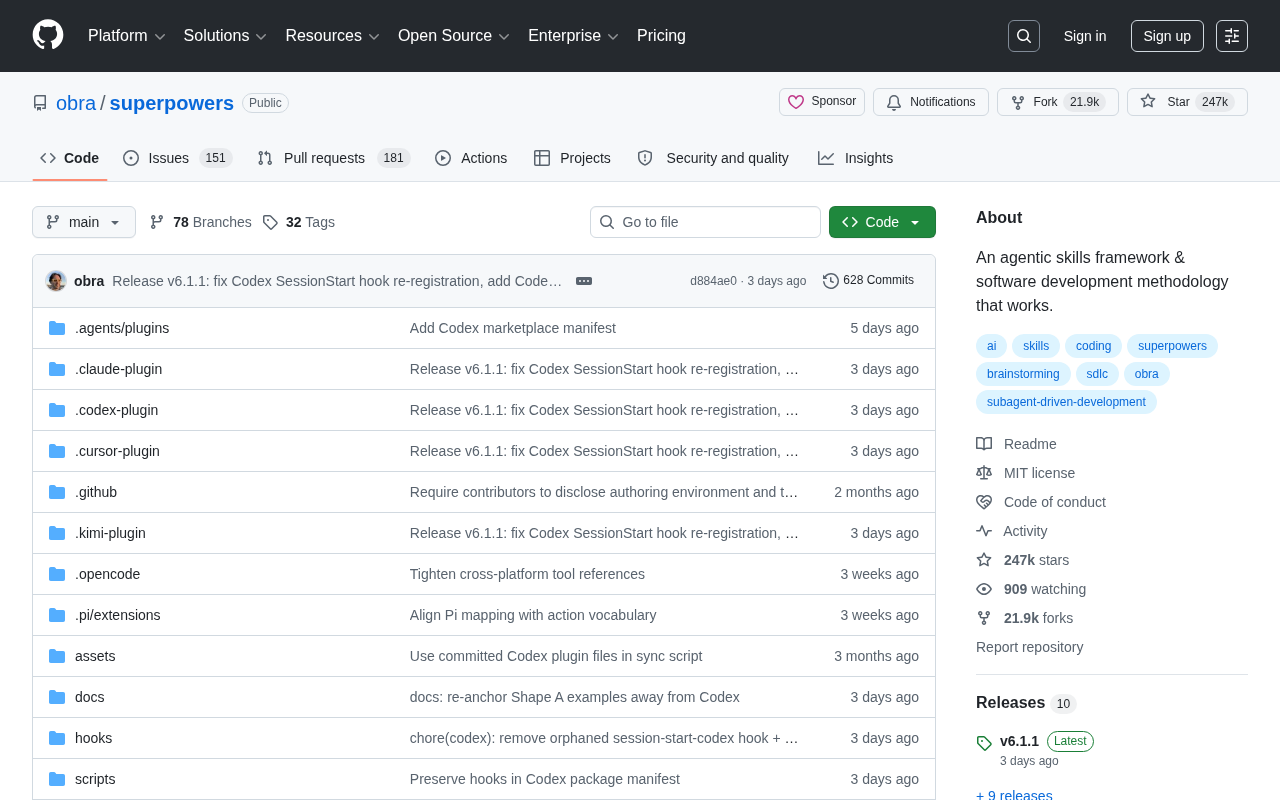
Superpowers: Enabling AI Agents to Truly Master Software Development Methodology
Superpowers is a trending GitHub project that builds an agentic skills framework with Shell scripts, injecting software engineering methodology into AI coding workflows. A deep dive into its architecture and value.
Read more →

·6 min
The Eight-Step Method for Agent Development: A Practical Path from Pitfalls to Production
Many enterprises fail at AI Agents due to choosing the wrong tools and lacking methodology. This article outlines an eight-step Agent development method—from cognitive foundations, scenario selection, hand-writing ReAct, and structured output to Tool Use, RAG, evaluation sets, and production fallback.
Read more →

·5 min
AI Agent Custom Tool Development Guide: Boost Efficiency by One-Click Reuse of Repetitive Tasks
An in-depth guide on developing Custom Tools for AI agents, compressing repetitive tasks like Excel-to-Markdown conversion from 30 minutes to under 5 seconds. Covers AGENTS.md registration, tool directory setup, and AI-assisted development.
Read more →

·3 min
The Complete AI Agent Development Workflow: A Seven-Step Guide from Requirements Analysis to Deployment
Want to build an AI Agent but don't know where to start? This guide covers the complete seven-step workflow—from requirements analysis, platform selection, prompt engineering, data storage, and UI building to testing and deployment.
Read more →

·6 min
AI Agent Development in Go: A Hands-On Guide to ByteDance's Eino Framework and Its Seven Core Capabilities
Build production-grade AI Agents with a pure Go stack using ByteDance's Eino framework. A deep dive into seven core capabilities: multi-Agent orchestration, long-task execution, command approval, RAG, MCP, Skills, and database reporting.
Read more →

·3 min
Getting Started with AI Agent Development: A Complete Learning Path to Building Intelligent Applications from Scratch
AI Agents are reshaping software development with 42.8% market CAGR. Learn the difference between Agents and traditional AI, plus a complete LangChain-based curriculum to launch your career in intelligent agent development.
Read more →