#Chinese LLM Codex integration
155 related articles

·4 min
Beyond Vibe Coding: A Complete Guide to Enterprise-Grade AI Engineering
Hit the Vibe Coding ceiling? This guide covers the three-stage AI coding progression path, Claude Code vs. Codex, SuperPower SDD, and how to go from vibe coding to enterprise-grade AI engineering.
Read more →

·7 min
Alibaba Open-Sources 2.4T Qwen Model as Chinese AI Sweeps the Global Competitive Landscape
Alibaba open-sources a 2.4 trillion parameter Qwen model and launches the Qwen Token Plan. Chinese models surge, Kimi K3 tops global rankings, and China's AI is reshaping the global competitive landscape.
Read more →

·4 min
Vibe Coding vs. AI-Assisted Engineering: An In-Depth Look at Enterprise-Level Development
Can AI coding tools let non-developers replace programmers? This deep dive examines Vibe Coding's real limits, compares Claude Code vs. Codex, and reveals the methodology behind enterprise-grade AI-assisted software engineering.
Read more →

·2 min
Getting Started with Cursor: A Comprehensive Comparison of AI Coding Tools
A comprehensive comparison of Cursor, GitHub Copilot, Windsurf, Trae, and other top AI coding tools — helping developers and non-technical users choose the right AI programming assistant.
Read more →

·6 min
GPT-5.6 Hands-On Deep Dive: Three-Tier Models + Ultra Multi-Agent, Codex Fully Evolved
OpenAI launches GPT-5.6 with three tiered models—Sol, Terra, and Luna—Ultra multi-agent parallel collaboration, Codex integrated into ChatGPT desktop, and an upgraded Computer Use.
Read more →

·5 min
The Complete Claude Code Guide: Installation, Core Features, and Advanced Workflows
An in-depth guide to Anthropic's Claude Code agentic coding tool, covering installation, pricing plans, model selection, token management, CLAUDE.md global memory, MCP integration, Subagents, and more.
Read more →

·2 min
Codex vs Claude Code: Which Should Beginners Choose?
One month using both Codex and Claude Code: a real-world comparison across model capability, Chinese UI, usage limits, and ecosystem interoperability for beginners.
Read more →

·2 min
ChatGPT's Three Modes Explained: How to Use Chat, Work, and Codex Without Burning Your Quota
ChatGPT now has three modes: Chat, Work, and Codex. Learn how each works, how the quota pools are calculated, and how to avoid burning tokens unnecessarily.
Read more →

·4 min
Pi Agent Deep Dive: Four Core Advantages of a Minimalist Open-Source Framework
Pi is a minimalist open-source Agent framework with just 4 default tools and under 1,000 tokens in its system prompt, with 70K GitHub stars. Deep dive into its 4 core advantages vs. Claude Code and Codex.
Read more →

·3 min
Pi Agent Review: A Minimalist Coding Agent That's Lightweight, Efficient, and Highly Customizable
Pi Agent hands-on review: ~1,200 token overhead, no built-in system prompts, supports Codex/Grok and more. Compared to Claude Code and OpenCode, Pi Agent wins with minimalist design and full customizability.
Read more →

·3 min
Coze Deep Dive: Multi-Agent Collaboration Platform Features & Usage Guide
A comprehensive guide to Coze by ByteDance: multi-agent collaboration, local tool integration, cross-platform sync, and credit system. Compare with Dify to get started fast.
Read more →

·3 min
Coze Deep Dive: Multi-Agent Collaboration Platform Architecture and Usage Guide
Deep dive into Coze's three core capabilities: multi-person multi-AI collaboration, customizable agents, and cross-platform project management. Covers credits, Dify comparison, and a practical learning path.
Read more →

·3 min
LangChain V1.3 in Practice: Mastering AI Engineering Mindset — From Tool User to Tool Master
Why do AI results vary so dramatically? LangChain V1.3 reveals the answer: engineering mindset. Covers LangGraph, Deep Agent, RAG, Time Travel, and more.
Read more →

·2 min
Getting Started with Codex: A Practical Guide to OpenAI's AI Coding Assistant
A practical guide to OpenAI Codex: core features, Codex vs. Claude Code comparison, and why the Codex+DeepSeek combo doesn't work. Avoid common pitfalls and boost your coding productivity.
Read more →

·2 min
How to Trust AI-Generated Code: A Practical Verification Framework for Developers
AI writes code fast, but developers fear deploying it. Learn a systematic methodology for verifying AI-generated code — from generation to trusted production deployment.
Read more →

·3 min
ChatGPT Integrates Codex: A Full Hands-On Breakdown of Work and Codex on Desktop
ChatGPT desktop gets a major upgrade, integrating Codex into new Work and Codex modules. Hands-on tests cover auto PPT generation and full AI video production pipelines.
Read more →

·3 min
Tencent Hunyuan Hy3 Free Access Guide: 5 Channels to Try It at No Cost
Tencent Hunyuan Hy3 is live — here are 5 free access channels including WorkBuddy, Hermes Agent, OpenRouter, SiliconFlow, and WeChat Mini Program (up to 100M tokens).
Read more →
·3 min
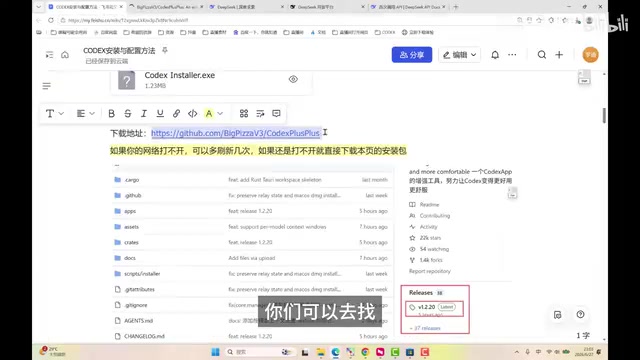
Connect Codex to DeepSeek: A Complete Setup Guide for Beginners
No ChatGPT Plus? No problem. Learn how to connect DeepSeek and other domestic LLMs to Codex using Codex++, with full setup steps from install to launch.
Read more →

·4 min
LangChain V1.3 in Practice: Master AI Engineering Thinking and Break Free from Tool Dependency
LangChain V1.3 course deep-dive: why engineering thinking beats tool-chasing. Covers RAG accuracy myths, Token cost control, and LangChain/LangGraph/Deep Agent breakdowns.
Read more →

·6 min
OpenAI Merges ChatGPT and Codex: The Super App for the AI Agent Era Is Here
OpenAI merges ChatGPT and Codex into a super app and releases three new GPT-5.6 models: Sol, Terra, and Luna. A deep dive into four hands-on workflows—Computer Use, Loops, and multi-threading—for the AI agent era.
Read more →